24/7 emergency call-out across North Wales

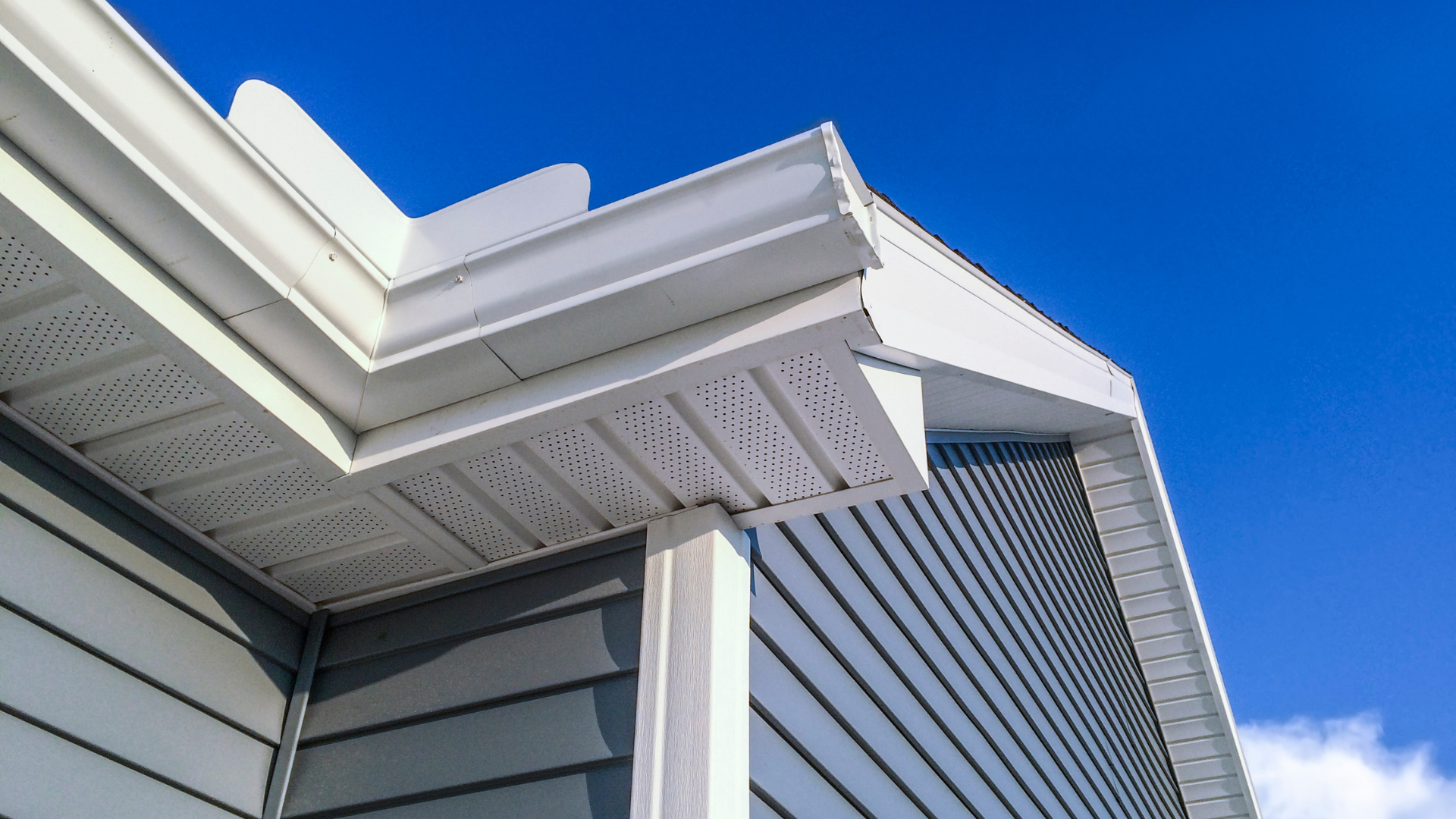
New white uPVC fascia board and vented soffit fitted under the eaves

uPVC Fascia And Soffit
Fitted Across North Wales
No More Painting Ladders

Rotten timber stripped out and replaced with maintenance-free uPVC, with the eaves detail and ventilation put right at the same time. Free survey, one fixed price, guaranteed workmanship.

Free survey · fixed-price quotes · own access equipment · guaranteed workmanship

5.0 Google rating

13 reviews

Three generations

family roofing team

25-year guarantee

on every new roof

Fully insured

workmanship guaranteed

24/7 call-out

storm damage & leaks

What Fascia And Soffit Work Involves

The fascia is the board on the face of the rafter ends that carries your guttering. The soffit is the horizontal board underneath, closing the gap between the wall and the fascia. Together they finish the eaves, hold the gutter line straight, keep birds and vermin out of the roof space, and ventilate the loft.

Timber fascias and soffits need painting every few years, and in the North Wales climate they rarely get it. Once the paint fails, the board takes up water, the back face, which nobody ever paints, rots first, and the fixings holding your guttering start pulling out of soft timber.

Replacing in uPVC removes the maintenance permanently. Where the timber behind is sound, capping boards can be fitted over it; where it is not, and it usually is not, the correct job is to strip the old timber off, replace any rotten rafter ends, and fit full replacement uPVC fascia and vented soffit on sound fixings.

Who This Is For

  • Homeowners with flaking paint, green staining or visibly soft fascia boards
  • Anyone whose guttering sags, leaks at joints or has pulled away from the wall
  • Owners of properties with birds nesting in the eaves or gaps into the loft
  • Anyone having a reroof, where access is already up and the eaves are exposed
  • Landlords wanting to remove a repeating maintenance item from the property
Book the free survey

What Rotten Eaves Lead To

The eaves are the lowest point of the roof, so every drop of water that runs off the covering passes them. When the fascia softens, the gutter brackets lose their grip, the gutter drops out of level, and water runs over the back edge instead of to the downpipe. That water then runs down the wall and into the eaves: the exact place already rotting.

Behind the fascia are the rafter feet. They are the structural ends of every rafter and they sit on the wall plate, which carries the roof. Replacing a fascia board is a modest job; replacing rafter feet and a section of wall plate means opening up the bottom of the roof, and that changes both the price and the timescale considerably.

There is also the loft. Gaps in a rotten soffit let birds and rodents into the roof space, where they damage insulation and cabling. And a blocked or non-existent eaves vent means the roof space cannot breathe, so condensation forms on the underside of the membrane and drips onto the insulation all winter.

Common Fascia And Soffit Mistakes

  • Capping over rotten timber, which hides the rot and gives the new boards nothing sound to fix to.
  • Fitting solid soffit with no ventilation, turning a loft into a condensation trap.
  • Reusing old, tired guttering on new fascia, so the joints keep dripping on new boards.
  • Nailing uPVC too tight, leaving no allowance for expansion, so boards buckle in summer.
  • Cheap thin board that goes brittle and discolours within a few years.
  • Leaving the gutter line out of level, so water still stands rather than running to the outlet.

How The Work Runs

Step 1: Inspection

We check the fascia, soffit, bargeboards, gutter line and, critically, the rafter feet and wall plate behind. We also check what ventilation the roof space currently has.

Step 2: Written findings

Photographs and a written account of what is rotten, what is sound, and whether any structural timber needs replacing before the new boards go on.

Step 3: Fixed-price quote

One fixed price covering strip out, disposal, timber repairs identified at survey, boards, guttering if being renewed, and access. Back to you the same day or the day after.

Step 4: Strip out and repair

Old timber and guttering removed, rotten rafter ends cut back and repaired, and the eaves made sound before anything new is fitted.

Step 5: Fit, ventilate and finish

uPVC fascia and vented soffit fitted with correct expansion allowance and stainless fixings, eaves ventilation provided, new guttering set to a true fall, everything cleaned down and all waste removed. Workmanship guaranteed.

What You Gain

No repainting, ever

uPVC needs a wash, not a ladder, a scraper and a tin of paint every third summer.

A gutter line that works

New boards give the brackets something solid to fix to, so the gutter holds its fall and empties properly.

Structure protected

Rafter feet and wall plate stay dry: the timber that is most expensive to put right once it goes.

A drier loft

Vented soffit restores eaves airflow, which is the standard cure for loft condensation.

Nothing living in your eaves

Closed, sealed eaves keep birds and rodents out of the roof space and off your insulation.

A visibly sharper property

Clean white or coloured board along the whole eaves and verge changes how the whole front of a house reads.

Boards, Options And Situations

Full replacement versus capping

Capping, fixing thin uPVC over existing timber, is quicker and cheaper, and it is appropriate only where the timber underneath is genuinely sound and dry. In practice, on properties where the fascia has been left long enough to warrant the work, the timber behind is usually soft at least in part.

Full replacement removes the timber altogether and fits structural-grade uPVC fascia direct to the rafter ends. It costs more up front and it is the only version that ends the problem rather than covering it. We survey the timber first and tell you honestly which you are looking at.

Ventilated soffits and roof-space airflow

Building practice requires continuous ventilation at the eaves on most pitched roof constructions. That is achieved with a vented soffit board, a continuous vent strip, or circular soffit vents at intervals. Without it, warm moist air from the house condenses on the cold underside of the roof.

We check whether insulation has been pushed into the eaves and is blocking the airflow path, extremely common after a loft insulation top-up, and fit eaves trays where needed so the ventilation route stays open.

Bargeboards, cladding and finishes

Bargeboards at the gable verge suffer the same rot as fascias and are replaced in the same operation, along with soffit returns and any uPVC cladding to gable apexes or dormer cheeks.

Boards are available in white, black, grey, and woodgrain finishes such as rosewood and light oak. On period and stone properties a darker or woodgrain finish usually sits better than bright white; we will say what we think looks right on your building.

Doing it with a reroof, and commercial work

The most economical time to renew fascia, soffit and guttering is during a reroof. Access is already up, the eaves are exposed, the eaves membrane and drip can be dressed correctly into the new gutter, and you pay once for access rather than twice.

On commercial and retail buildings the same principles apply at larger scale, and the driver is usually keeping water off the building envelope and away from doorways and shopfronts. Work is planned so the premises can stay open.

Free survey & quote

Always free, always in writing, back to you same day or next.

Fixed price

Quoted as a fixed price, not a day rate. No creeping costs.

Guaranteed work

Workmanship guaranteed on all jobs. 25 years on new roofs; flat-roof warranties per manufacturer system.

Straight Answers

The questions we are asked most about upvc fascia & soffit across North Wales.

Ask us directly on 07538 586813
How much does uPVC fascia and soffit cost?

It is priced by the metre run, the number of elevations, the access required and how much rotten timber has to be replaced. Survey and quote are free and the price is fixed.

How long does the job take?

A typical house is one to three days depending on size, access and the amount of timber repair needed.

Should I replace the guttering at the same time?

Almost always yes. New guttering on new fascia means one access charge, a correct fall, and no old leaking joints dripping on new boards.

Do you cap over the old boards or take them off?

We take them off wherever the timber is not sound, which is most of the time. Capping is only offered where the timber genuinely justifies it.

Will this fix my loft condensation?

It very often does. Vented soffit restores eaves airflow, and we fit eaves trays where insulation is blocking the path. If the roof needs ridge or tile ventilation as well, the survey will say so.

What colours are available?

White, black, grey and woodgrain finishes including rosewood and light oak. We will advise on what suits a period or stone property.

Does uPVC need maintenance?

Only an occasional wash. It does not need painting, and it does not rot.

Do you replace rotten rafter ends?

Yes. Repairs visible at survey are in the quote; anything found once the old boards are off is shown to you and priced before it is done.

Book Your Free Survey
And Get A Fixed Price

Tell us what the roof is doing and we will come and look at it. You get photographs, a written account of the problems and a fixed-price quote, with no obligation to go ahead.

  • Free survey and written findings with photographs
  • Fixed-price quote same day or the day after the visit
  • Workmanship guaranteed; 25 years on a new roof
  • 5.0 from 13 Google reviews across North Wales

Roof leaking right now?

07538 586813

24/7 emergency call-out across North Wales.

Call nowFree survey