24/7 emergency call-out across North Wales

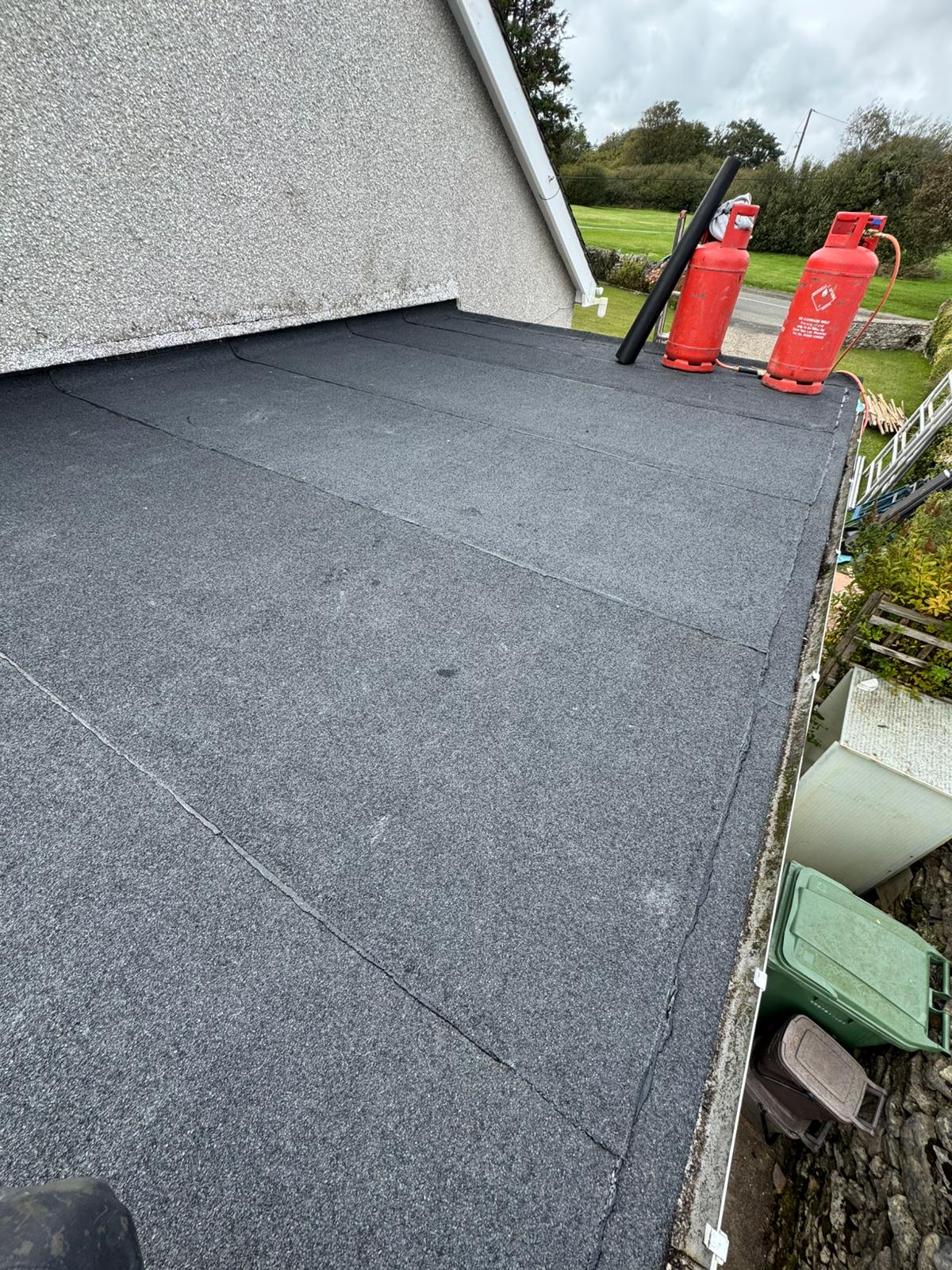
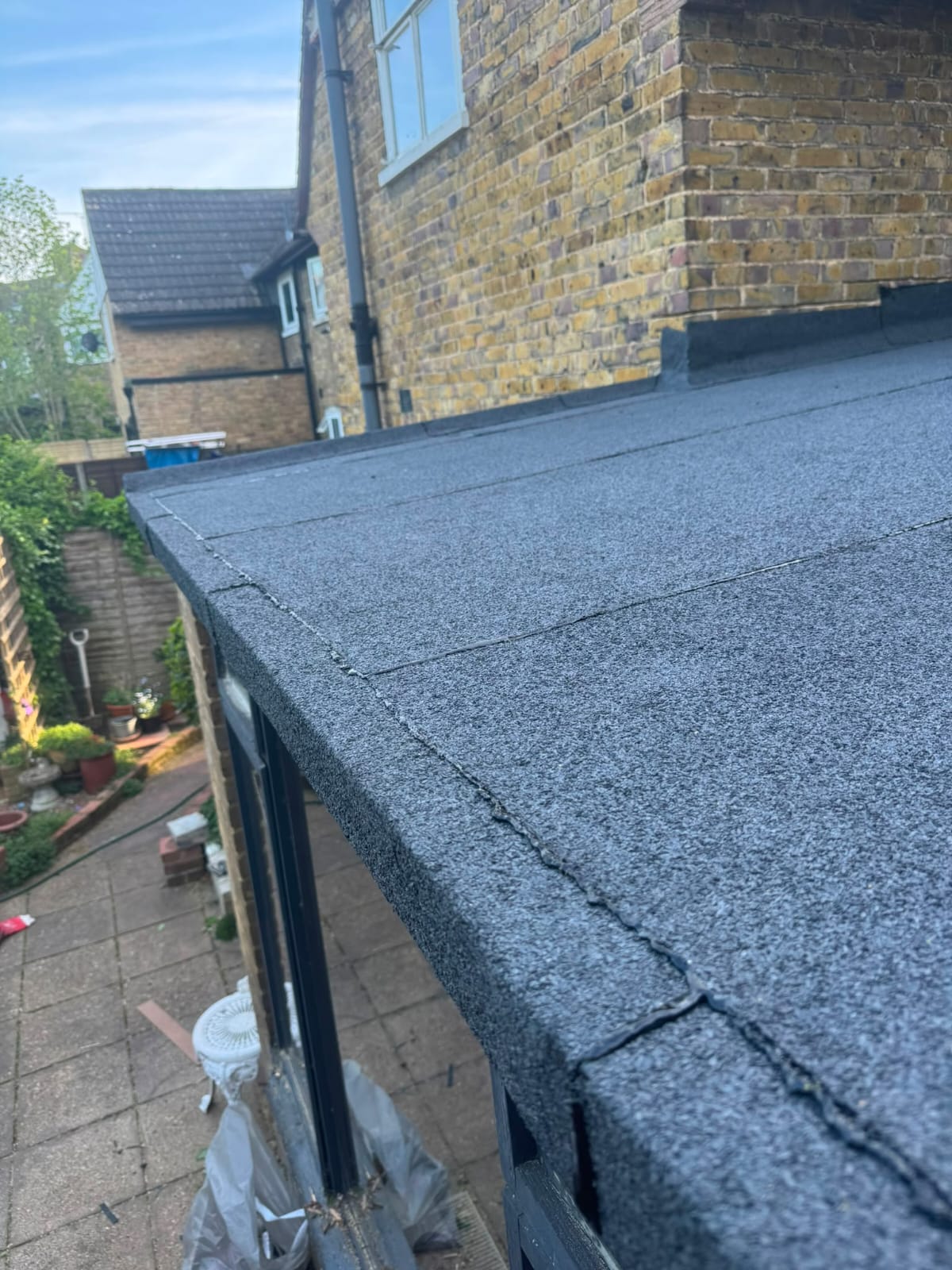
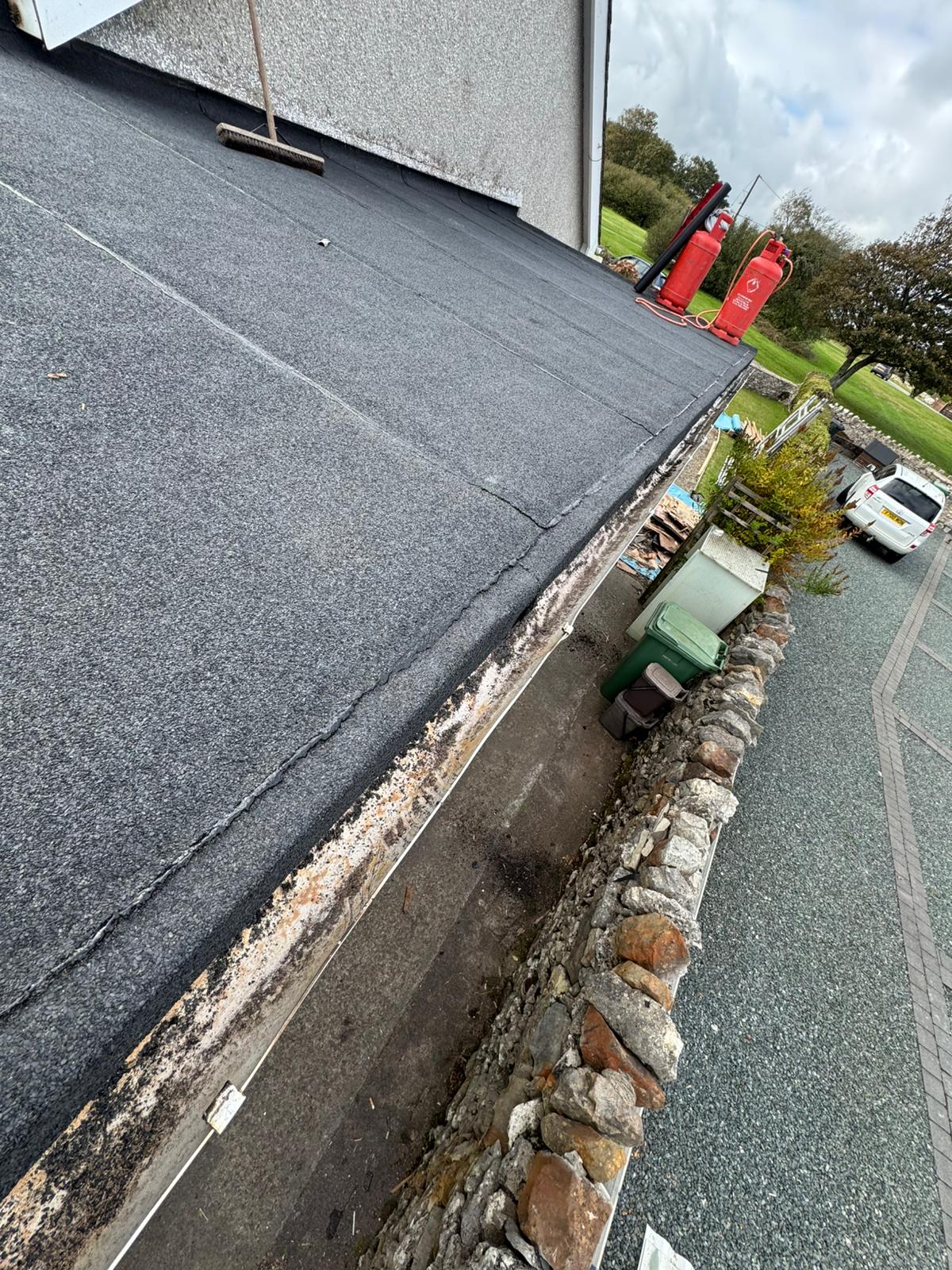
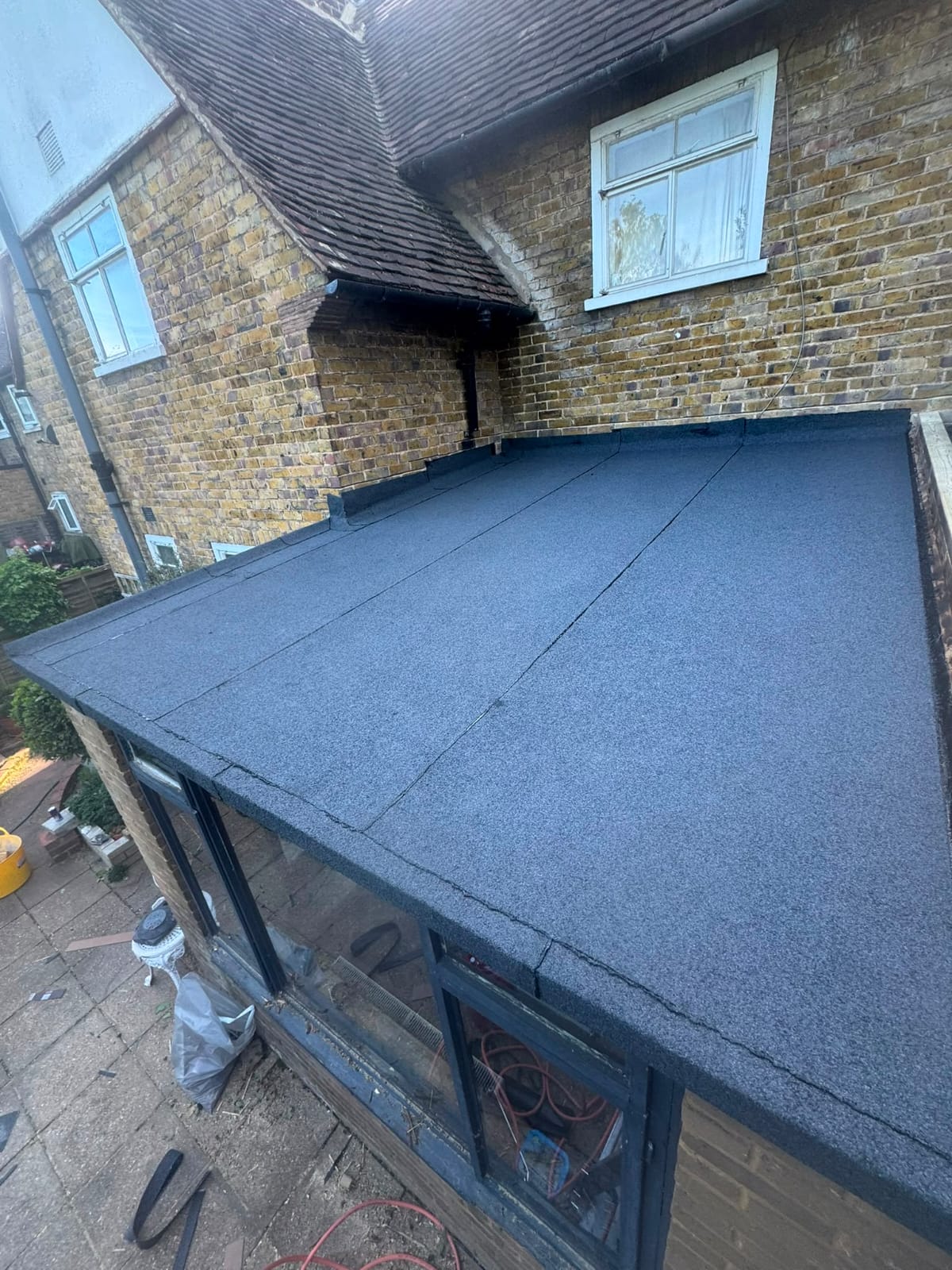
Repaired and resealed felt flat roof on a domestic extension in North Wales

Flat Roof Repairs In
North Wales
Found, Fixed, Documented

Splits, blisters, failed laps and leaking upstands repaired to the correct method for your system, so the repair holds and any remaining manufacturer warranty stays intact.

24/7 emergency call-out · free survey · fixed-price repairs · guaranteed workmanship

5.0 Google rating

13 reviews

Three generations

family roofing team

25-year guarantee

on every new roof

Fully insured

workmanship guaranteed

24/7 call-out

storm damage & leaks

What A Flat Roof Repair Covers

A flat roof repair targets the specific point of failure: a split in the membrane, a blister that has broken, a lap that has lifted, a corner that has cracked, a perished upstand, a failed outlet or a trim that has come away. The rest of the covering is left in place and the roof carries on.

The hard part on a flat roof is locating the failure, because water travels between the membrane and the deck and can appear metres from where it got in. We inspect the whole surface, check every detail and upstand, look at the outlets, and inspect from below where the ceiling gives clues about the direction of travel.

Repairs are made in materials compatible with the existing system: EPDM patched with EPDM components, GRP repaired with resin and matting, felt heat-welded, liquid systems recoated. Using the wrong product does not just fail; on EPDM in particular, solvent-based products can destroy the membrane around the repair.

Who This Is For

  • Homeowners with a damp patch on an extension, dormer or garage ceiling
  • Anyone with visible splits, blisters or lifted laps on a flat roof
  • Owners of GRP or EPDM roofs still in warranty who need a compliant repair
  • Landlords needing a fast, evidenced fix between tenancies
  • Commercial premises where a leak is dripping into trading or storage space
Book the free survey

Why Flat Roof Leaks Do Not Wait

Water on a flat roof has nowhere to go but through. A pinhole that would be trivial on a pitched roof becomes a permanent feed into the deck, because rain that lands on that spot stays on that spot. Every wetting cycle takes it further into the boards.

Timber decks are the casualty. OSB and chipboard swell and lose strength; plywood delaminates. Once the deck is soft the repair stops being a patch and becomes a strip, a new deck and a new covering, several times the cost, plus insulation, which will be saturated and useless.

Inside, the damage is quick and visible: plasterboard stained and blown, cornice cracked, decoration ruined, and in a converted room, wet insulation and mould. On commercial premises there is also stock, equipment and closed trading floor to account for.

Repairs We Get Called To Redo

  • Bitumen paint or flashband slapped over an EPDM split: incompatible, and it damages the membrane further.
  • Silicone smeared into a crack in fibreglass, which prevents a proper resin repair later.
  • Patching the ceiling stain's location rather than tracing the actual entry point.
  • Recoating a wet roof, sealing moisture into the deck where it keeps rotting out of sight.
  • Ignoring the blocked outlet that caused the ponding that caused the split.
  • Repairing a roof that is genuinely finished, spending good money three times over on a covering that needs replacing.

How A Flat Roof Repair Runs

Step 1: Inspection and leak tracing

We survey the whole surface, not just the obvious area, membrane, laps, upstands, corners, trims, outlets and abutments, and check the ceiling and deck from below where possible.

Step 2: Diagnosis in writing

Photographs of every defect and a written explanation of what is letting water in, how far the water has travelled, and whether the deck below is still sound.

Step 3: Repair or replace, honestly

If the covering has life left, we quote a fixed-price repair. If it is at the end of its life or the deck is soft, we say so and quote a replacement instead of taking payment for a patch that will fail.

Step 4: Compatible repair

The repair is carried out in the correct materials and to the system manufacturer's method: EPDM components and adhesives, GRP resin and matting, heat-welded felt, or a liquid overlay, so any remaining system warranty is not voided.

Step 5: Test, clear and guarantee

The repair is water-tested, outlets are cleared, debris and moss removed so the roof drains, and the work is covered by our workmanship guarantee, with completion photographs for your records.

What The Repair Delivers

Found, not guessed

The entry point is traced and photographed, so you are paying to fix a defect rather than to seal a suspicion.

Warranty-safe methods

Compatible materials and manufacturer methods keep any remaining system warranty intact.

Fast response

24/7 emergency call-out across North Wales, typically £150–£250 depending on time of day and location.

Deck protected

Closing the leak now is the difference between a repair and a full strip, new deck, new insulation and new covering.

Straight advice

If your roof is past repairing you get told, with the evidence, rather than sold three patches in three years.

Fixed price, guaranteed

A fixed-price quote for the repair described, covered by our workmanship guarantee.

Recent Flat Roof Repairs Work

Failed flat roof covering before replacement in North WalesFailed flat roof covering before replacement in North WalesFailed flat roof covering before replacement in North WalesCompleted flat roof replacement with clean seams and new edge trims

System-Specific Repairs

EPDM rubber repairs

EPDM fails at details far more often than in the field: corners, upstands, outlets and any point where the membrane was stretched over an awkward shape. Splits and punctures are cleaned, primed and patched with the manufacturer's own components; failed corner details are cut out and remade rather than covered.

The critical rule is compatibility. Bitumen products, solvents and general-purpose sealants attack EPDM. Where a previous repair has used them, the affected area is cut out and replaced back to sound membrane.

GRP fibreglass repairs

Fibreglass cracks where the deck moves, at trim junctions, and where it was laid too thin or cured badly in cold or damp weather. Crazing across a whole surface indicates a cure problem and generally means recoating rather than patching.

Local repairs are ground back to sound laminate, keyed, and rebuilt with matting and resin, then topcoated. Done properly the repair is structurally continuous with the original, which a smear of sealant never is.

Felt and liquid system repairs

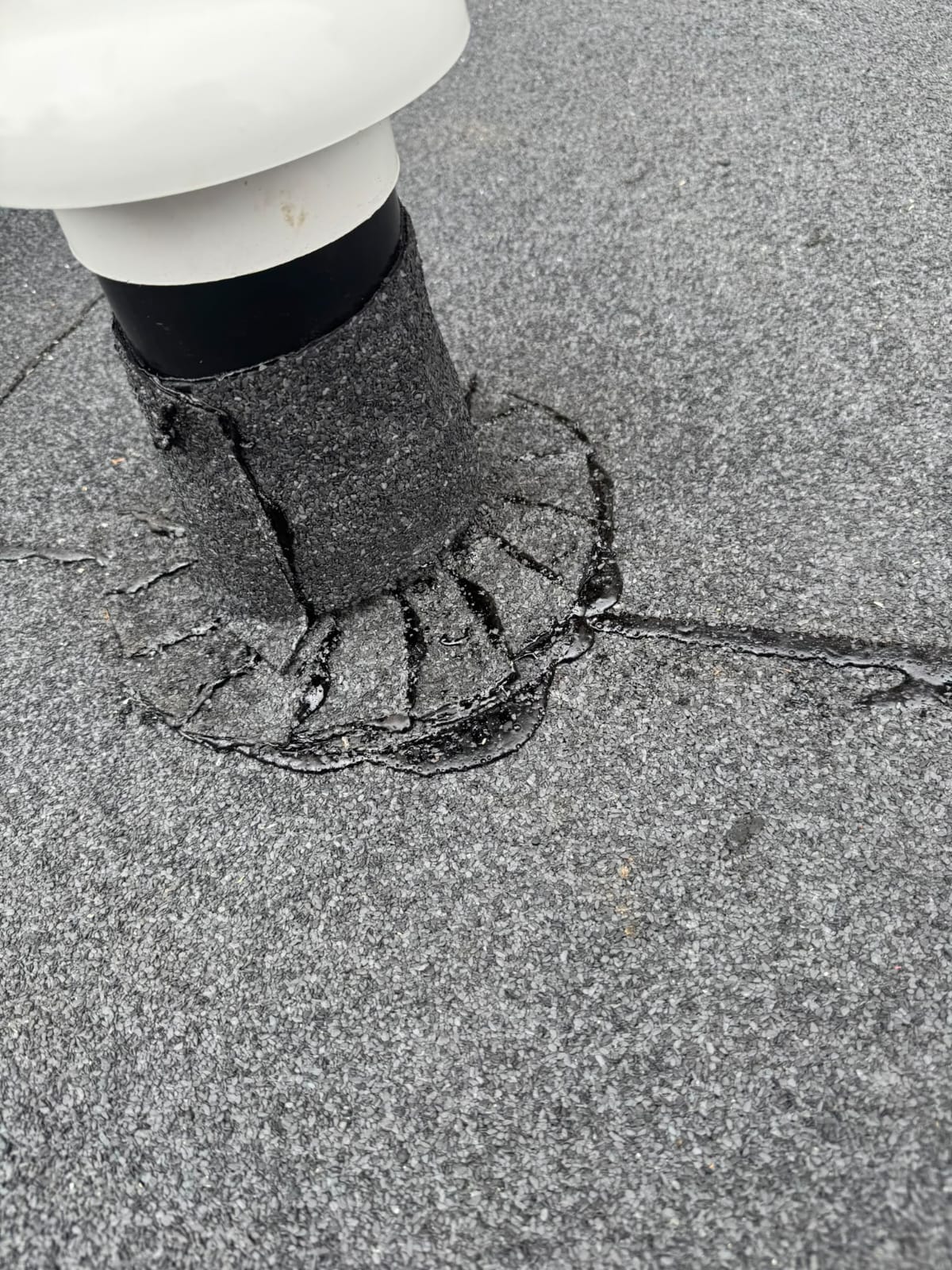
Blistering, lifted laps and splits at upstands are the usual felt failures. Blisters are cut, dried, patched and re-welded; laps are re-welded rather than glued. Where felt is generally sound but tired, a liquid overlay across the whole surface can add years at a fraction of replacement cost.

Liquid systems are repaired by cleaning back, priming and recoating with the same product family, and they are also the most practical way to seal complex roofs with lots of penetrations, plant bases and awkward abutments.

Outlets, drainage and prevention

A high proportion of flat-roof leaks start with drainage: a blocked outlet, a gutter full of moss, or a rainwater pipe that backs up. Water then sits deeper and longer than the roof was designed for, and finds any weakness. Clearing outlets and keeping the surface free of debris is the cheapest maintenance there is.

Where a roof ponds because the falls are wrong rather than because it is blocked, no repair will make it last. We will tell you that clearly and quote the corrective work: usually tapered insulation or new firrings under a new covering.

Liquid overlay systems: a repair that covers the whole roof

Where a felt, asphalt or tired GRP roof is leaking in several places but the deck below is still dry and sound, a liquid-applied overlay is often the sensible answer. The surface is cleaned, dried and primed, then a fibre-reinforced liquid membrane is rolled over the entire roof, taken up every upstand and dressed into outlets, curing to one seamless skin with no laps to fail.

The advantage is that the existing covering stays where it is. There is no strip-out, no skip, no exposed deck and no risk of rain getting into the building mid-job, so the work is quicker, cleaner and considerably cheaper than a full replacement. It is particularly useful on roofs with lots of pipes, vents and plant bases where a sheet system would need dozens of hand-formed details.

An overlay is not a way of hiding a wet deck. We probe the deck first, and where the boards or insulation are saturated we say so and quote the strip and replacement instead: a liquid system over trapped moisture simply seals the rot in.

Free survey & quote

Always free, always in writing, back to you same day or next.

Fixed price

Quoted as a fixed price, not a day rate. No creeping costs.

Guaranteed work

Workmanship guaranteed on all jobs. 25 years on new roofs; flat-roof warranties per manufacturer system.

Straight Answers

The questions we are asked most about flat roof repairs across North Wales.

Ask us directly on 07538 586813
Can you overlay my flat roof instead of stripping it?

Often, yes. If the deck below is dry and sound, a fibre-reinforced liquid overlay can be applied straight over the existing felt, asphalt or fibreglass, sealing the whole roof in one seamless coat without the cost, mess and weather risk of a strip-out. Where the deck is soft or the insulation is saturated we will tell you and quote the replacement instead.

How much does a flat roof repair cost?

It depends on the system, the size of the failure and access. We survey and quote free, and the quote is a fixed price for the repair described.

Can you repair a flat roof in winter?

Most repairs, yes. Some fibreglass work needs suitable temperature and dry conditions to cure; where that is the case we will make the roof safe temporarily rather than lay a repair that will fail.

Will a repair void my manufacturer warranty?

Not when it is carried out in compatible materials to the manufacturer's method, which is how we work. Incompatible DIY patches frequently do void warranties.

How quickly can you attend a leak?

We run a 24/7 emergency call-out across North Wales. Emergency call-outs are typically £150–£250 depending on time of day and location.

Is it worth repairing or should I replace?

If the deck is sound and the covering has life in it, repair. If the deck is soft or the membrane is failing generally, replacement is the cheaper answer over any sensible timescale: the survey tells you which you have.

How long will the repair last?

A correctly executed repair on a roof with life left in it lasts for years, and it is covered by our workmanship guarantee. A repair on a roof at the end of its life is a stopgap and we will describe it as one.

Why is the damp patch nowhere near the damage?

Water tracks between the membrane and the deck before it finds a way through the ceiling. That is exactly why we survey the whole roof rather than quoting from a photograph of your ceiling.

Do you clear blocked outlets and gutters?

Yes, and it is included as part of the repair visit: a blocked outlet is often the cause rather than a coincidence.

Book Your Free Survey
And Get A Fixed Price

Tell us what the roof is doing and we will come and look at it. You get photographs, a written account of the problems and a fixed-price quote, with no obligation to go ahead.

  • Free survey and written findings with photographs
  • Fixed-price quote same day or the day after the visit
  • Workmanship guaranteed; 25 years on a new roof
  • 5.0 from 13 Google reviews across North Wales

Roof leaking right now?

07538 586813

24/7 emergency call-out across North Wales.

Call nowFree survey