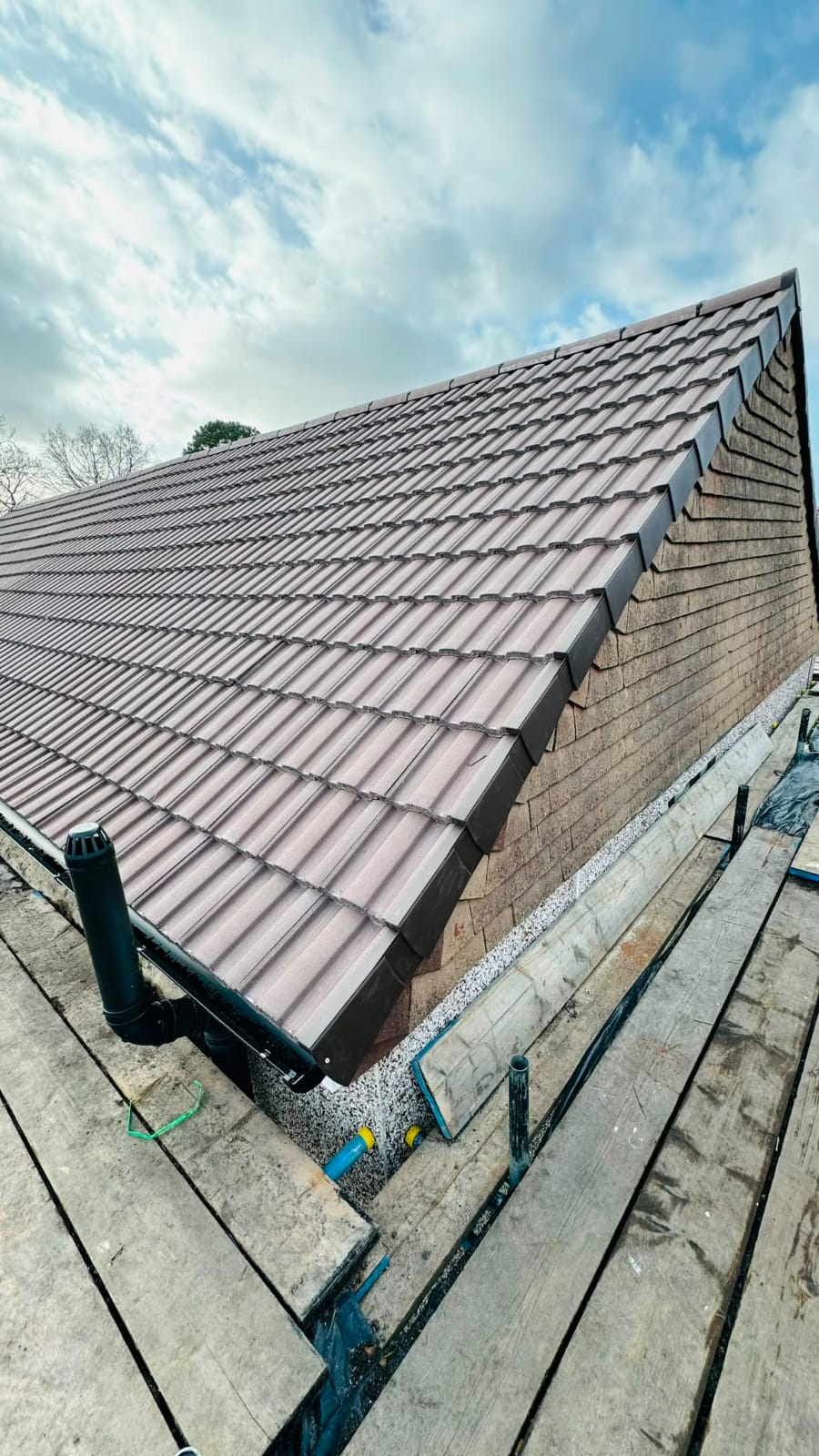
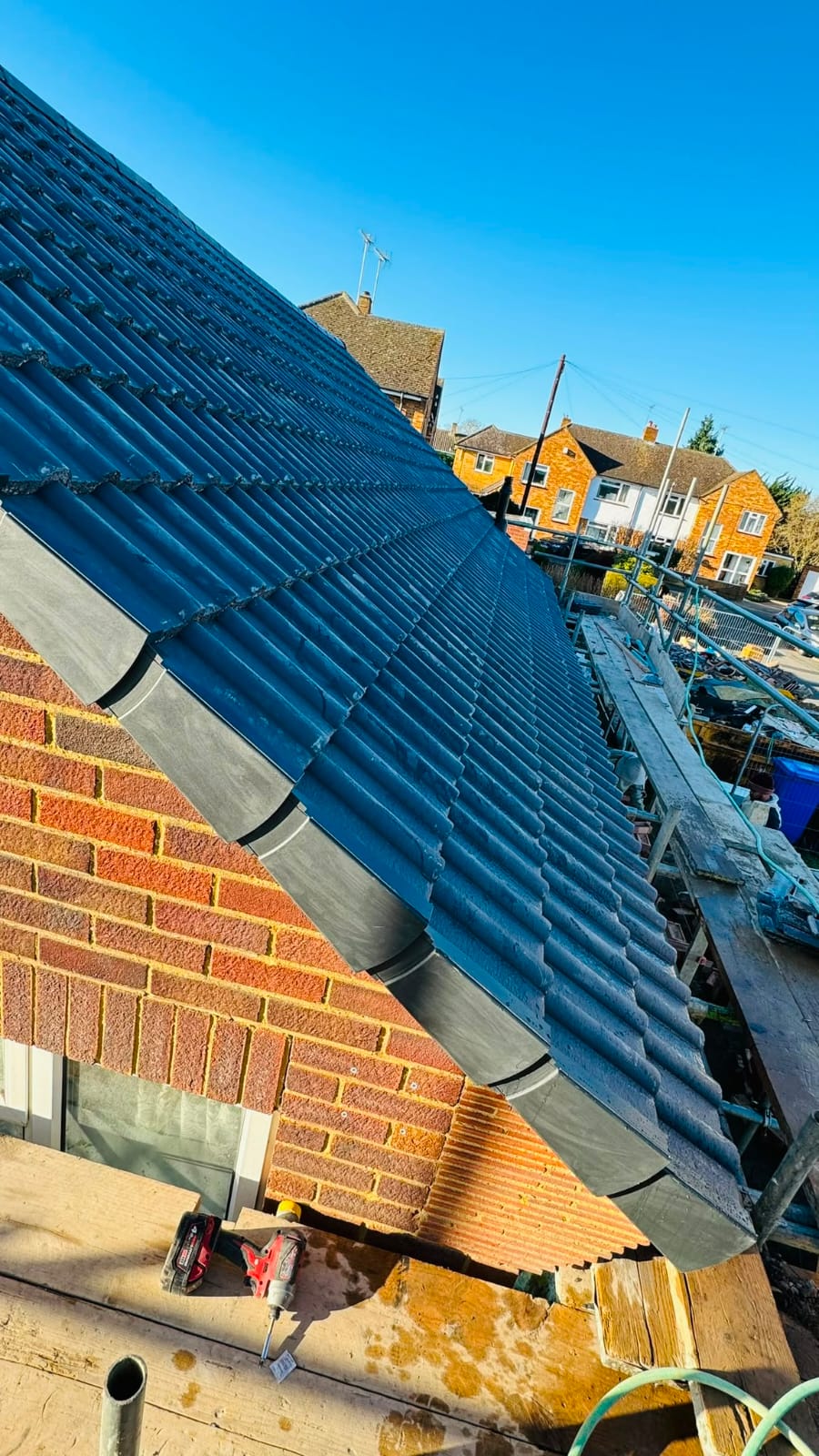
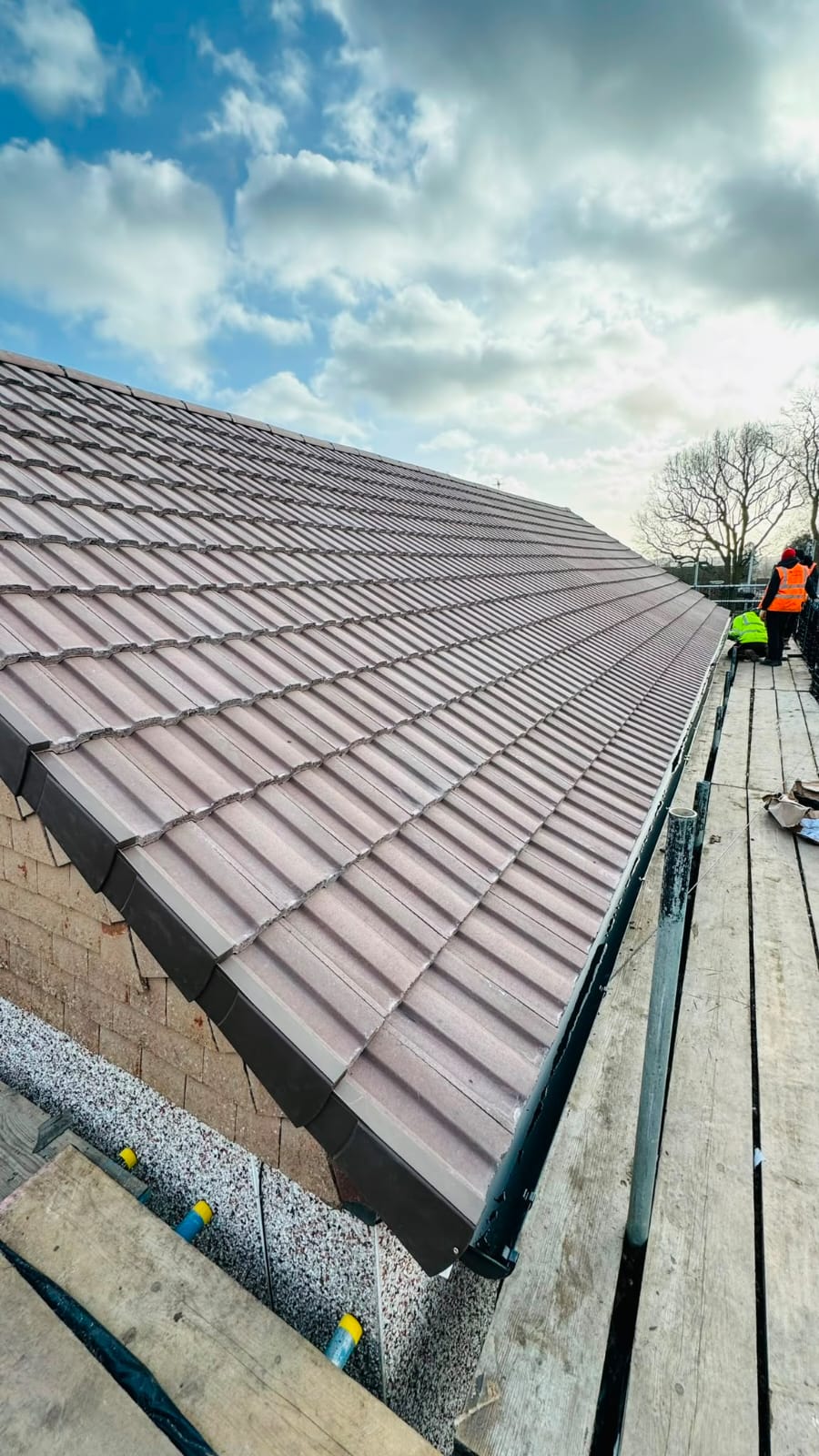
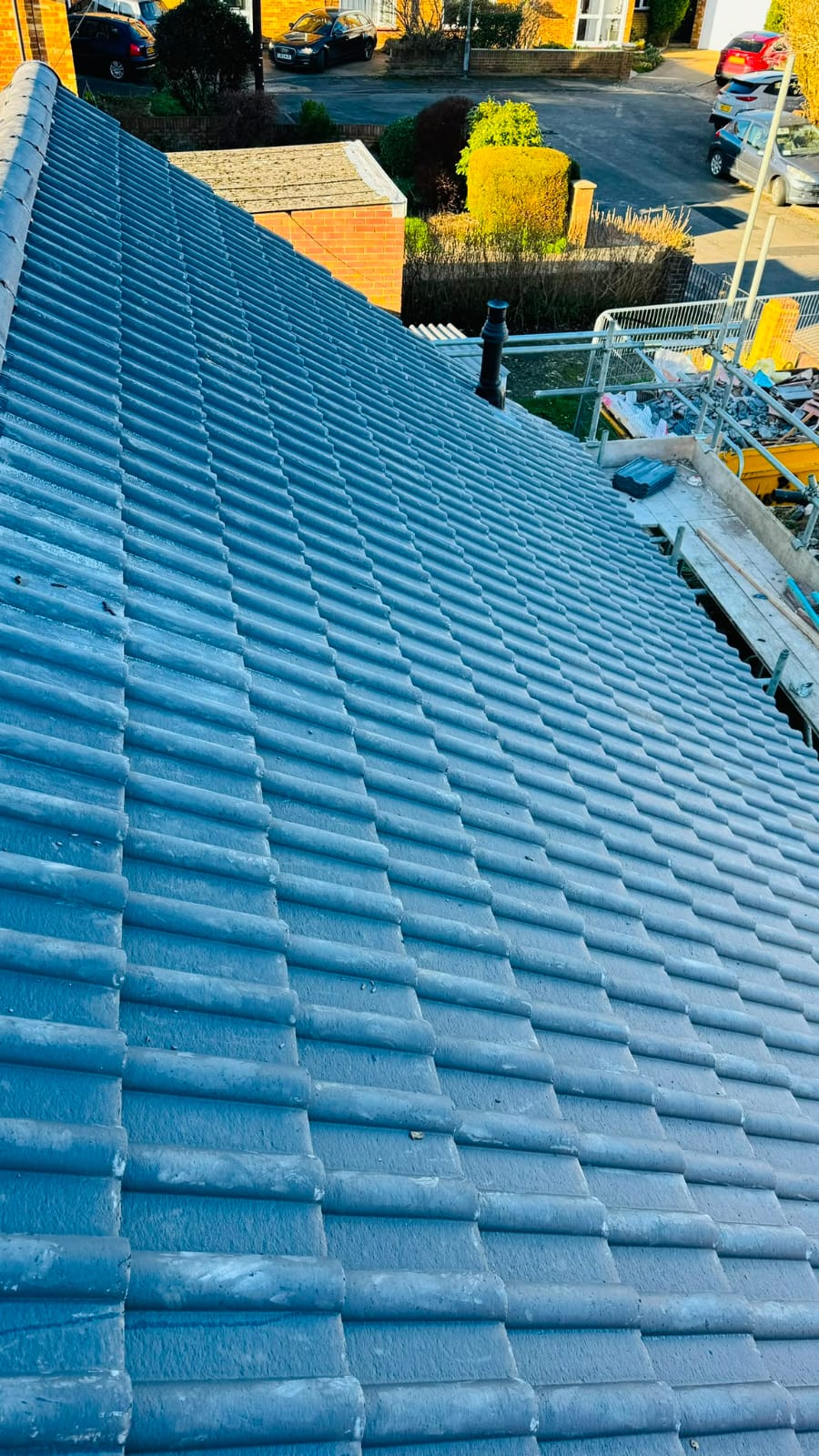
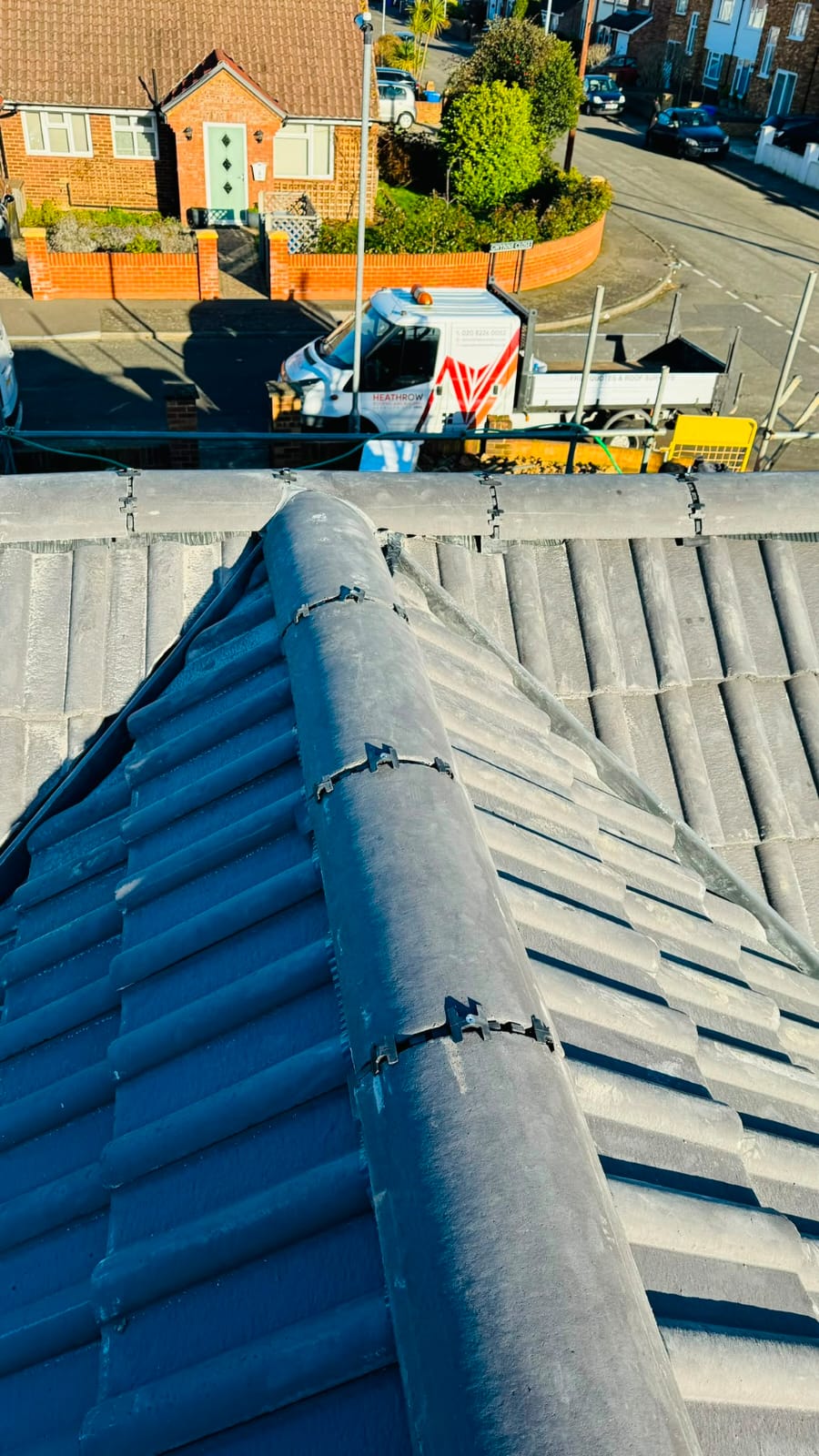
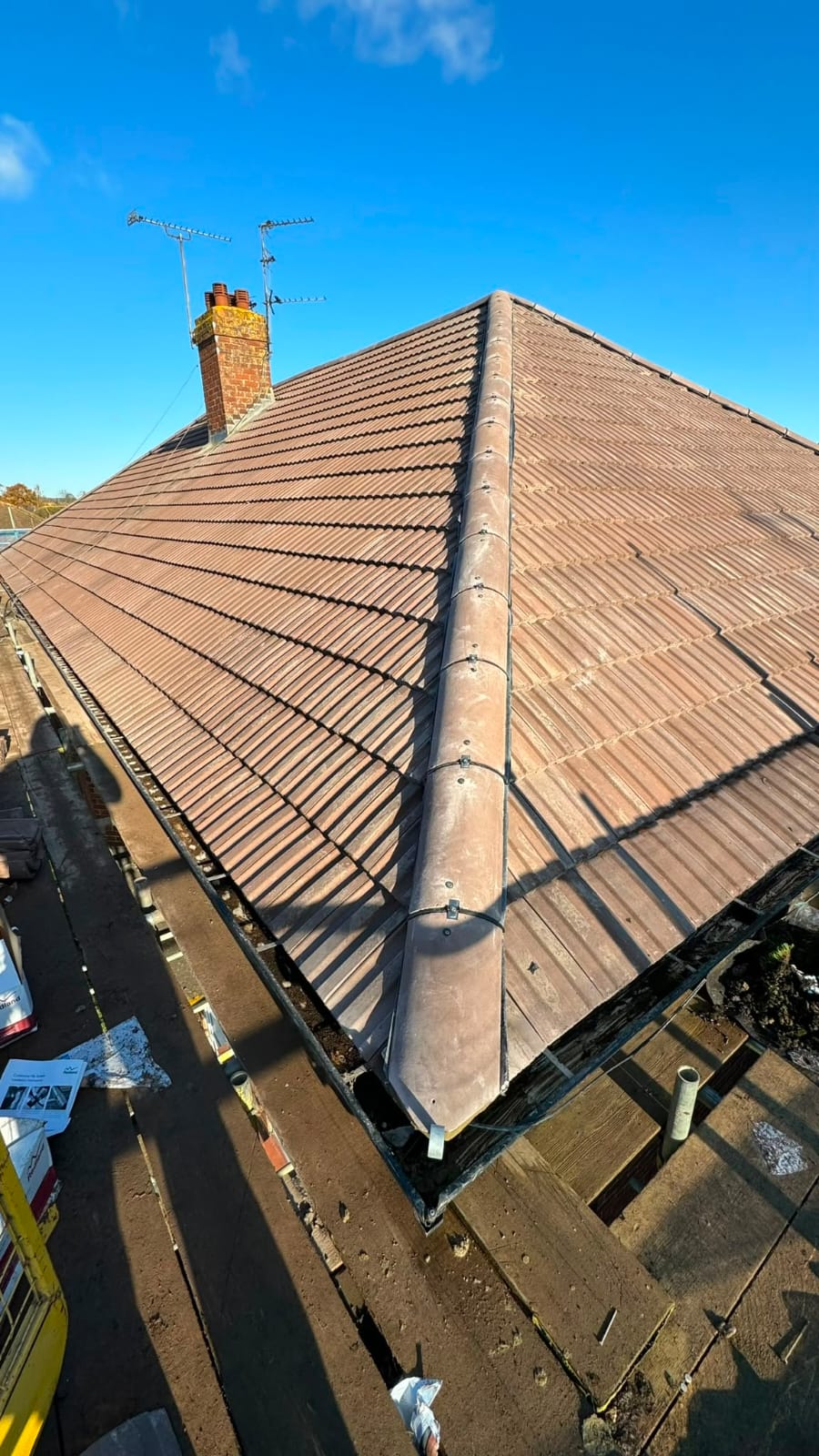
Traditionally ridge tiles, verges and valleys were bedded in sand and cement mortar. Mortar is rigid, the roof is not, and after ten to fifteen winters of movement, frost and rain it cracks, loses its bond and lets go: cracked mortar fillets on the ridge, gappy verges the wind gets under, and washed-out valley cement are three of the most common causes of leaks and slipped tiles we are called to.
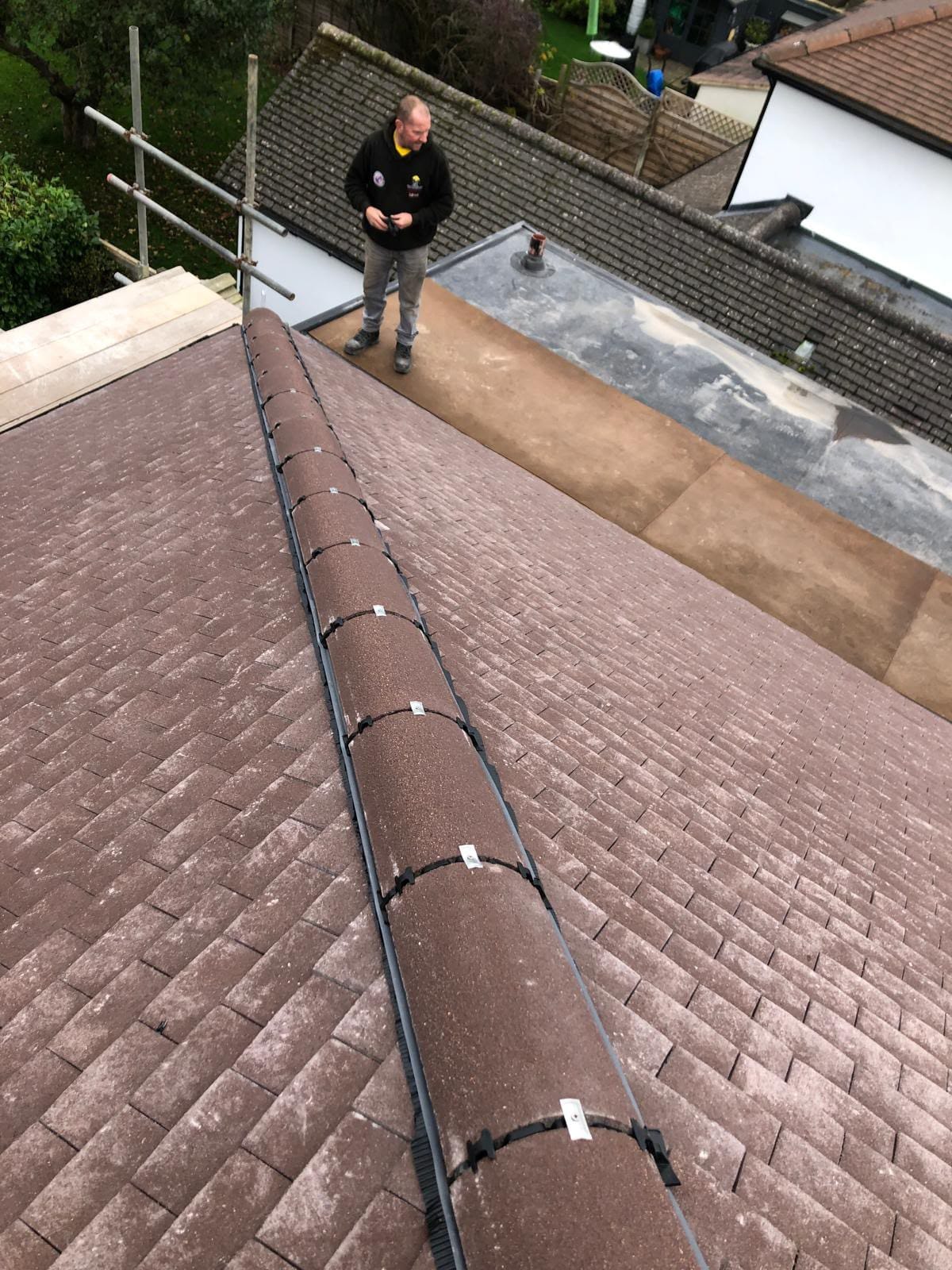
Dry fix systems replace that mortar with mechanically fixed components. A dry ridge system uses a ventilated roll under the ridge with each ridge tile screwed to a batten, so the ridge is fixed, ventilated and free to move. Dry verge units clip over the tile ends and are screwed down, closing the gable against wind, birds and rodents without a strip of mortar to fall out.
Dry valley systems use a preformed GRP or aluminium valley trough with the tiles cut and supported to it, so the valley drains cleanly rather than relying on cement wedges that crack and wash away. All three carry manufacturer guarantees, need no maintenance, and are what current best practice and BS 5534 expect on new and re-roofed work.
We fit dry ridge, dry verge and dry valley on full re-roofs as standard, and we also retro-fit them on their own where the tiles are otherwise sound and it is only the mortar work that has failed: a considerably cheaper job than a re-roof and one that stops the most likely source of the next leak.