24/7 emergency call-out across North Wales

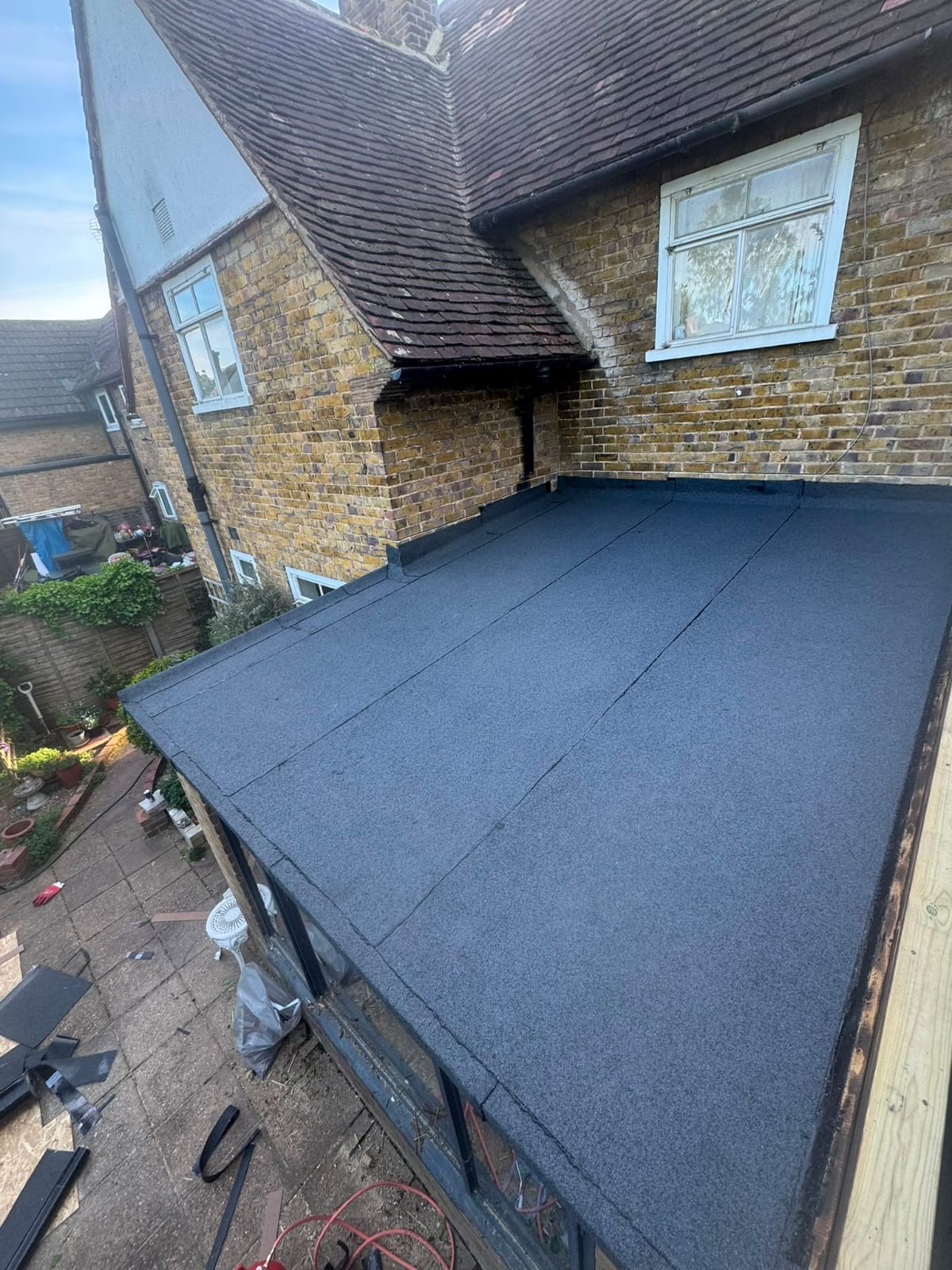
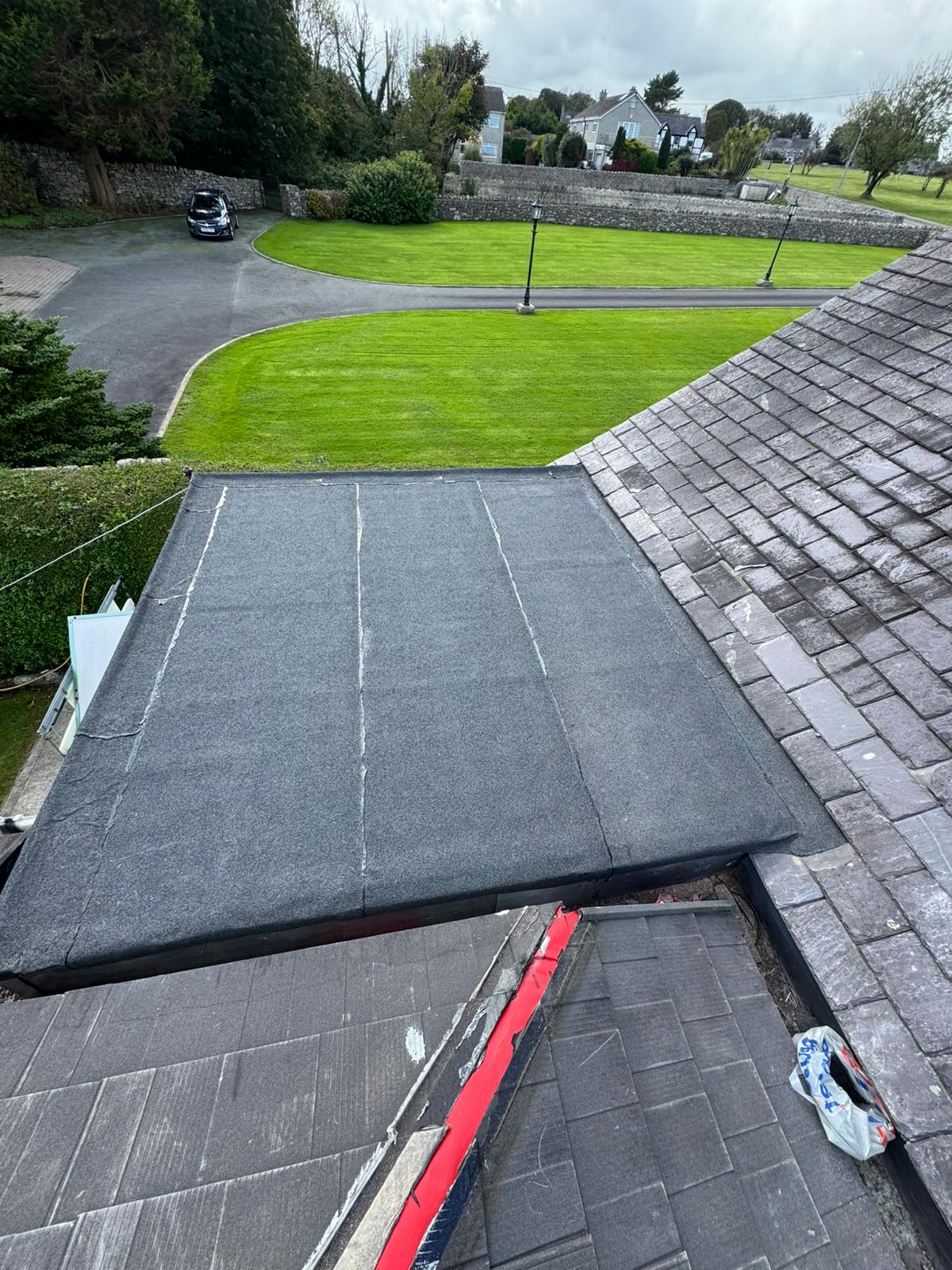
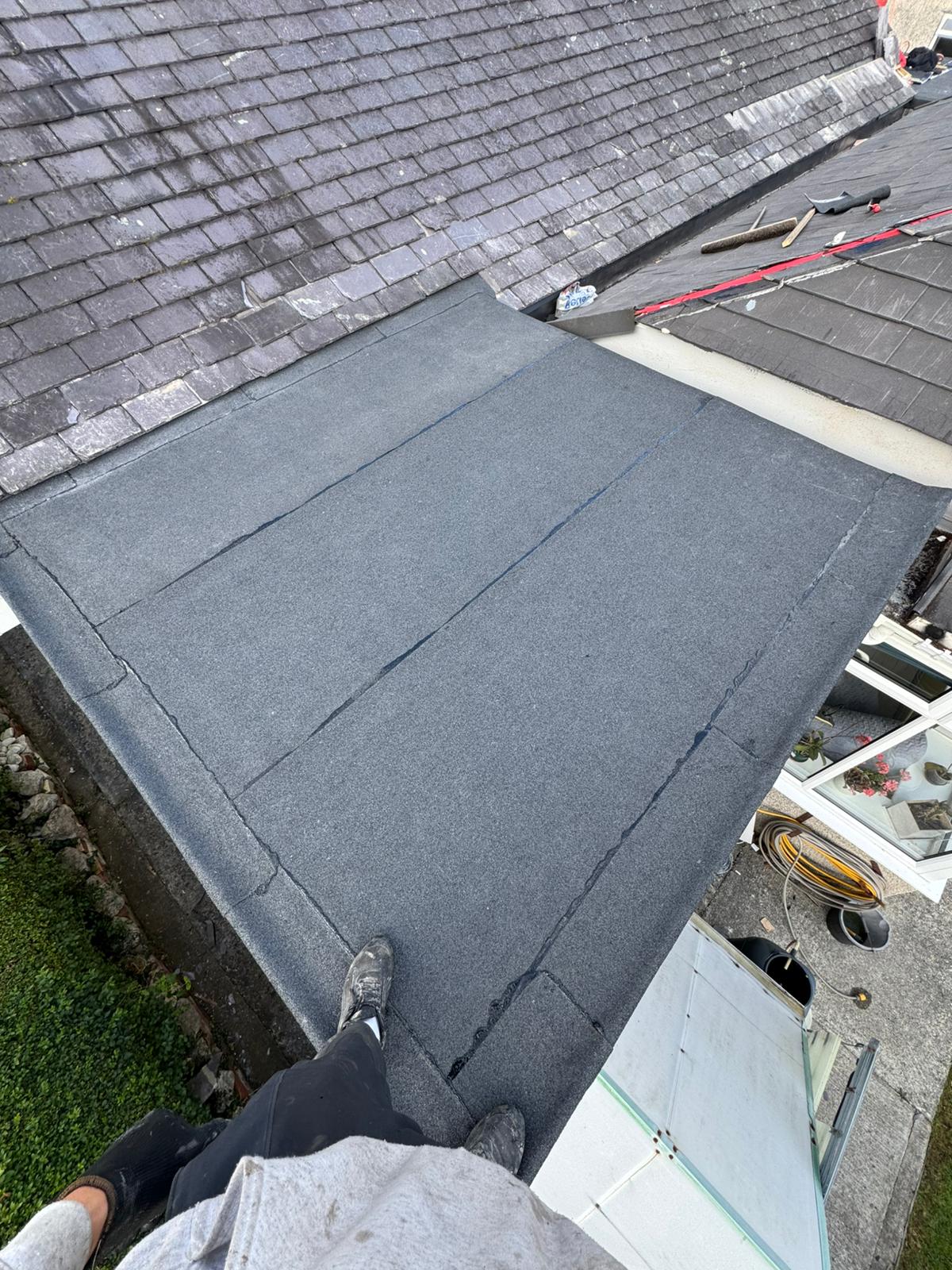
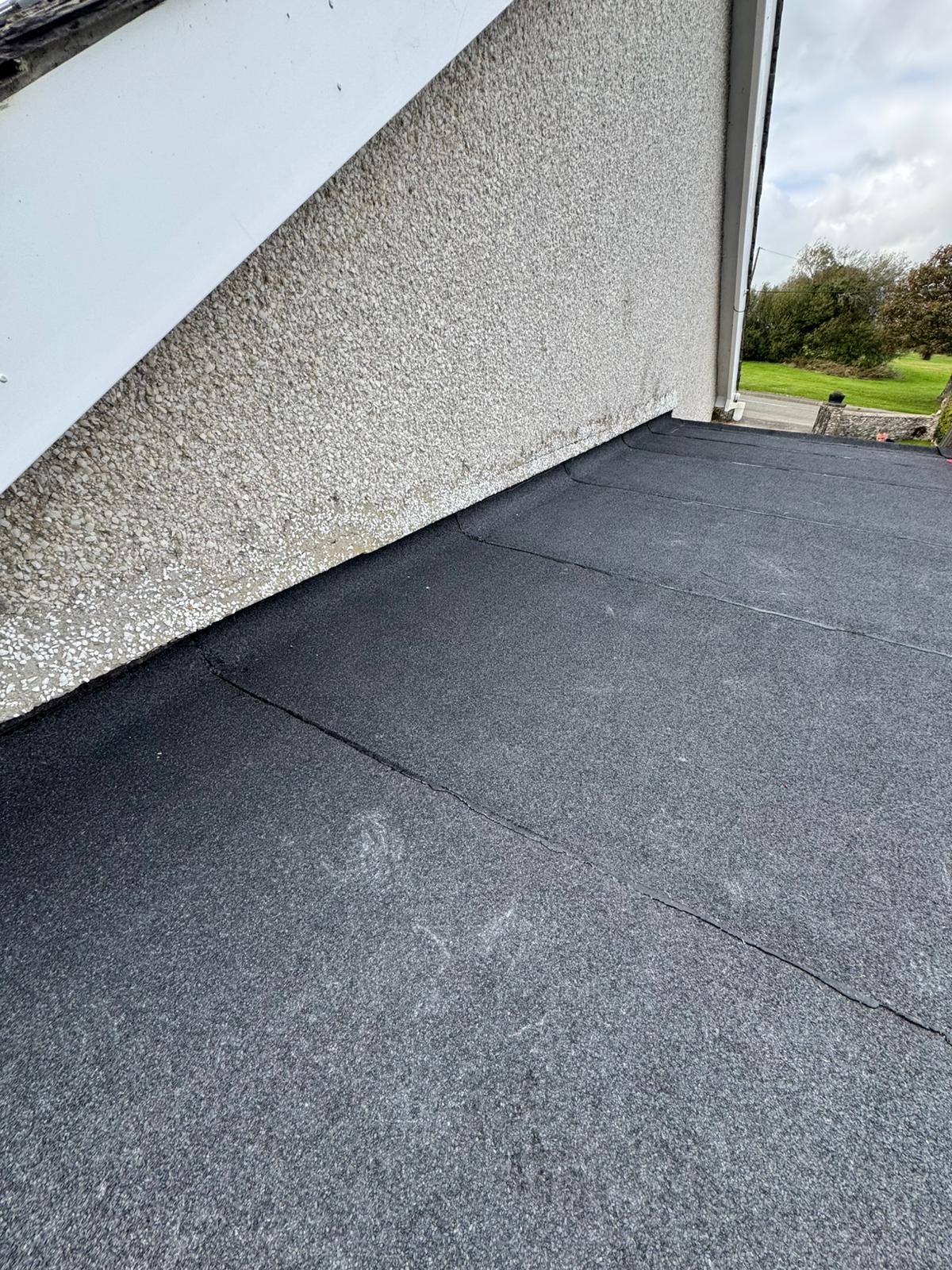
Newly laid felt flat roof covering on a rear extension

Flat Roof Replacement
Across North Wales
Built To Stay Watertight

The old covering off, the deck checked and corrected, falls put right, and a new system installed to the manufacturer's specification, with their warranty passed to you and one fixed price agreed first.

EPDM · GRP · felt · liquid systems · free survey · fixed price

5.0 Google rating

13 reviews

Three generations

family roofing team

25-year guarantee

on every new roof

Fully insured

workmanship guaranteed

24/7 call-out

storm damage & leaks

What A Flat Roof Replacement Involves

Replacing a flat roof means stripping the failed covering, inspecting and repairing the deck below, correcting the falls so water actually reaches the outlet, insulating where the build-up requires it, and installing a new waterproofing system with all its edge details, upstands, drips, trims and outlets, done to the manufacturer's method.

The covering is only part of the job. Most flat roofs that fail early fail because of the parts nobody sees: a soft, delaminated deck that was covered over, a fall that ponds water in the middle, or an upstand that was never taken high enough. A new membrane over those problems buys a few years at best.

We install EPDM rubber, GRP fibreglass, torch-on felt and liquid systems, and we specify the one that suits your roof, its traffic and your budget: not the one we happen to prefer. Where the system carries a manufacturer warranty, that warranty is passed on to you.

Who Needs A Flat Roof Replacement

  • Owners of extensions, dormers and garages with felt roofs that have blistered or split
  • Anyone patching the same flat roof every year
  • Property owners with ponding water that never drains after rain
  • Homeowners converting or extending, needing a flat roof tied into a pitched roof
  • Commercial and retail premises with flat roofs over trading space
Book the free survey

Why A Failing Flat Roof Gets Expensive Fast

A flat roof has no gravity assistance. Where a pitched roof sheds a leak that gets past the covering, a flat roof holds it. Water sits on the deck, tracks between the covering and the boards, and appears somewhere else entirely, which is why patching the wet patch on the ceiling almost never works.

Once water reaches the deck, chipboard and OSB swell and lose strength, and plywood delaminates. Insulation soaks and stays soaked. At that point a replacement is no longer just a covering: it is deck, insulation and covering, and the price roughly doubles.

Ponding accelerates everything. Standing water finds every pinhole, and in winter it freezes and works laps apart. A roof laid without proper falls will keep failing no matter how good the membrane is.

What Goes Wrong On Flat Roofs

  • Overlaying a new membrane on a wet, soft deck to avoid the cost of stripping it.
  • Leaving the original inadequate falls, so water ponds and works at every joint.
  • Upstands taken up only 75mm instead of the 150mm most systems require.
  • Fibreglass laid in cold or damp conditions, so it cures badly and crazes.
  • Mixing incompatible materials, solvent-based products over EPDM, for instance, which destroys the membrane.
  • No outlet upgrade, so a new roof drains through an old, undersized and half-blocked gully.

How A Replacement Runs

Step 1: Survey and system selection

We inspect the covering, probe the deck for soft areas, check the falls and outlets, look at the upstands and abutments and assess how the roof is used: foot traffic, a balcony, or purely weather cover.

Step 2: Written findings and specification

You get photographs, the diagnosis and a specification naming the system, the deck works required, the insulation build-up and every edge detail, so you can compare quotes on equal terms.

Step 3: Fixed-price quote

One fixed price for the specification, back to you the same day or the next. Where the deck may hide further damage, we say so up front and tell you what that would cost rather than surprising you later.

Step 4: Strip, deck and falls

Old covering removed, deck repaired or renewed, firrings or tapered insulation used to create proper falls to the outlet, insulation fitted where the build-up requires it.

Step 5: System install, test and warranty

The new system is installed to the manufacturer's method with all upstands, trims, drips and outlets detailed correctly. We flood or water-test as appropriate, clear the site, and pass on the manufacturer's warranty along with our workmanship guarantee.

What You Get

Water actually leaves the roof

Falls corrected and outlets sized so the roof drains rather than ponds: the single biggest factor in how long it lasts.

A sound deck underneath

Soft and delaminated boards replaced, not covered up, so the new membrane is fixed to something solid.

Manufacturer-backed

Systems installed to the manufacturer's specification, with their warranty passed on to you.

Warmer rooms below

Where the build-up allows, insulation is upgraded at the same time: extensions and dormers with flat roofs are usually the coldest rooms in the house.

Detail-first workmanship

Upstands, drips and trims done to spec, because that is where flat roofs leak first.

One fixed price

Agreed before we start, including strip out and disposal.

Recent Flat Roof Replacement Work

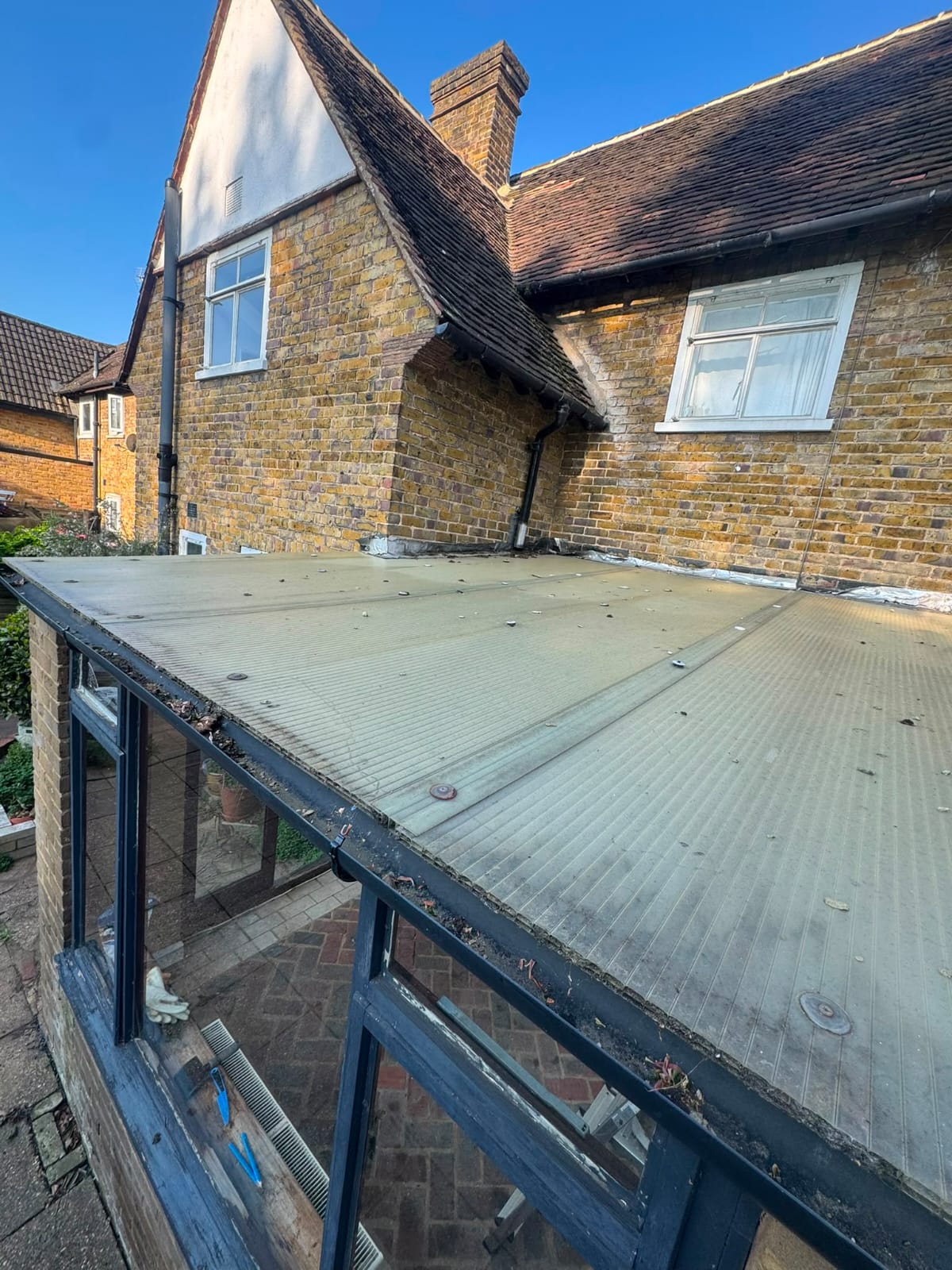
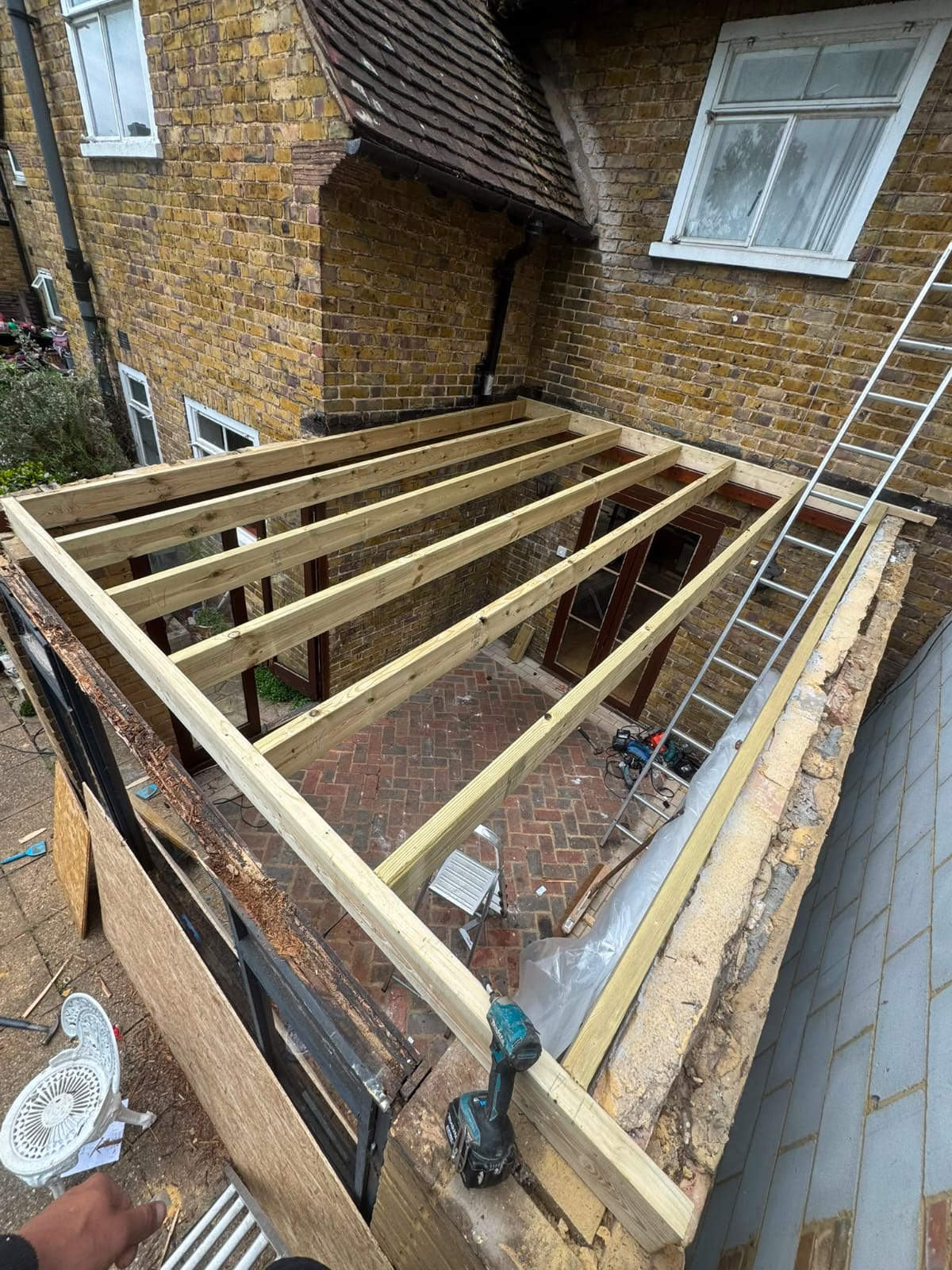
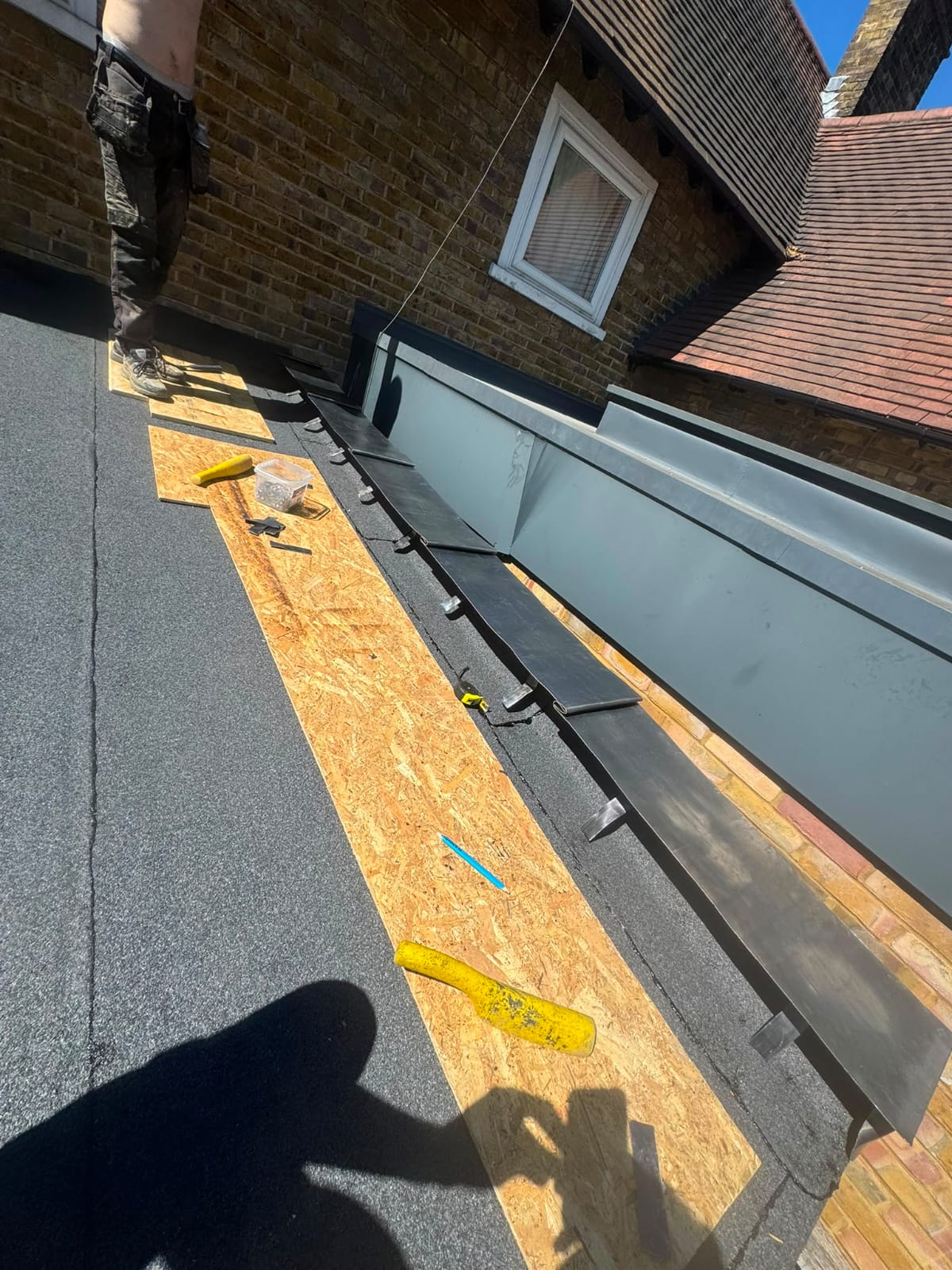
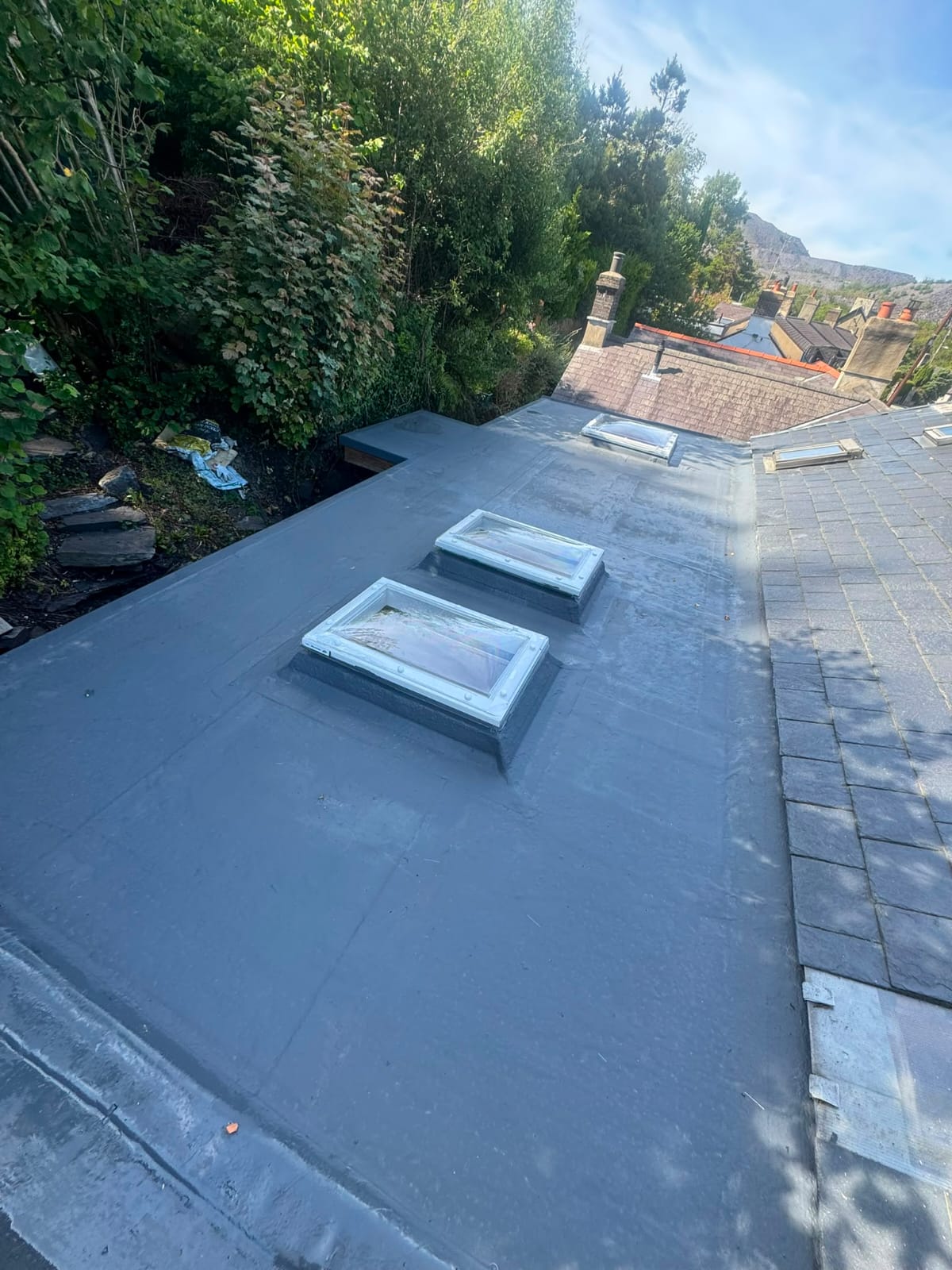
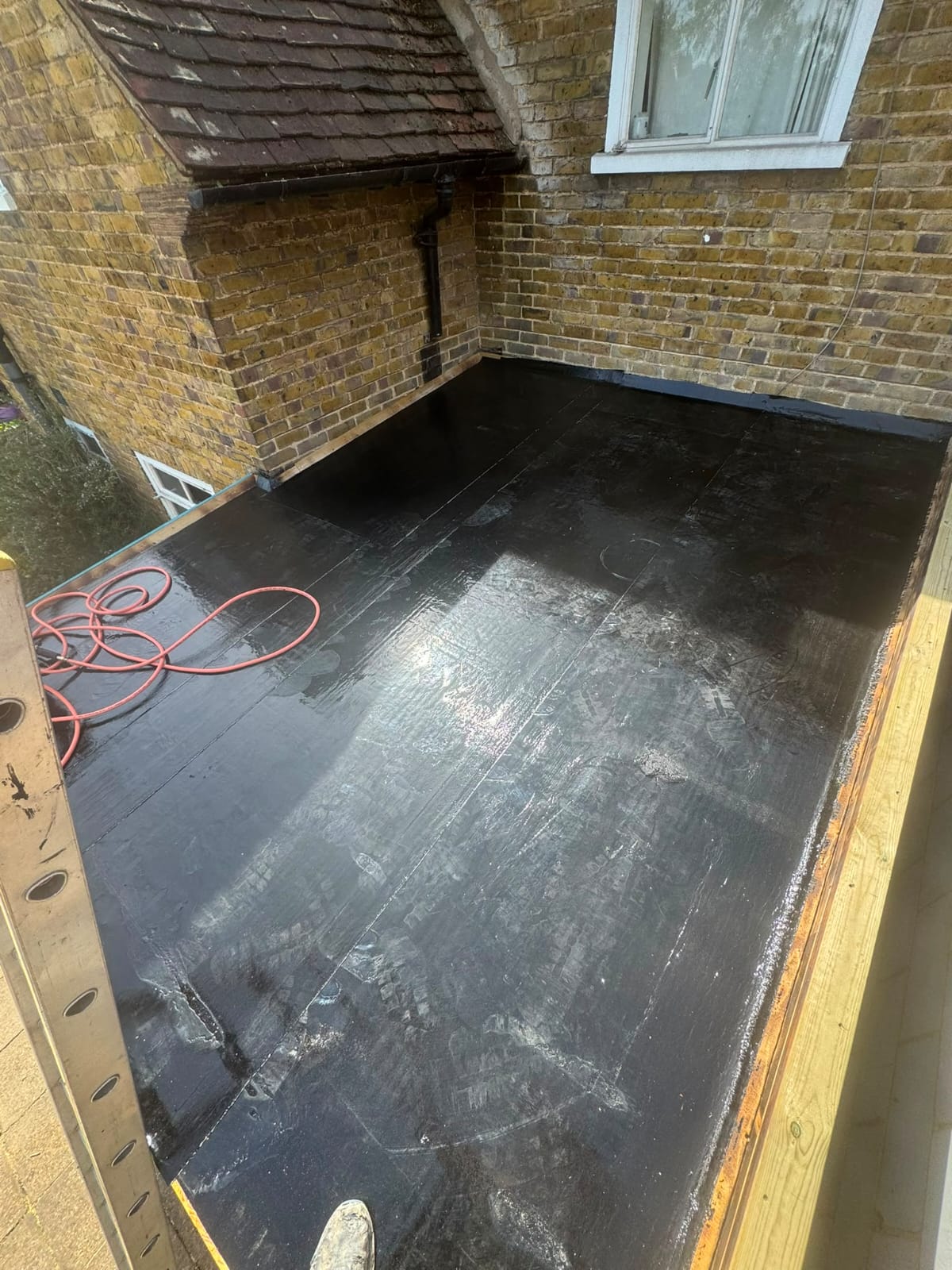
Failed flat roof covering before replacement in North WalesFlat roof replacement in progress with new membrane being laidFlat roof replacement in progress with new membrane being laidCompleted flat roof replacement with clean seams and new edge trimsCompleted flat roof replacement with clean seams and new edge trimsCompleted flat roof replacement with clean seams and new edge trimsCompleted flat roof replacement with clean seams and new edge trimsCompleted flat roof replacement with clean seams and new edge trimsCompleted flat roof replacement with clean seams and new edge trims

Systems, Decks And Applications

EPDM rubber

EPDM is a single-piece rubber membrane, usually installed in one sheet on domestic roofs so there are no field seams to fail. It is flexible across a wide temperature range, handles building movement well, and has a long service life for the money. It is a strong default for extensions, garages and dormers.

Its weak points are mechanical damage and detailing. Sharp objects and heavy foot traffic can damage it, and every corner, upstand and outlet has to be detailed with the manufacturer's own components and adhesives rather than improvised.

GRP fibreglass

GRP is a seamless glass-reinforced resin laid in situ and cured to a hard, walkable surface. It suits balconies, roof terraces and any flat roof that will be walked on, and it takes crisp trims and edges well.

GRP is weather- and temperature-sensitive during installation and needs a rigid, dry, well-fixed deck; on a bouncy or damp deck it will crack. That is why the deck work is quoted as part of the job, not bolted on afterwards.

Torch-on felt and liquid systems

Modern high-performance torch-on felt is nothing like the pour-and-roll felt on 1970s garages. Installed as a two- or three-layer system with proper detailing it is durable, economical and easily repaired, which makes it a sensible choice on larger and commercial roofs.

Liquid-applied systems are the answer where a roof has complicated detailing, many penetrations, awkward abutments, plant bases, or where stripping is impractical. They cure to a seamless membrane over almost any shape, and they are frequently the right tool on commercial roofs.

Decks, insulation and building regulations

Flat roof decks are typically plywood, OSB or concrete. Timber decks are inspected for softness and delamination and replaced where necessary. Falls are created with firring pieces or tapered insulation: usually a minimum design fall so water runs off even after deflection.

Replacing more than half a flat roof normally brings building regulations thermal requirements into play, which means adding insulation. That can be warm-deck construction, with insulation above the deck under the membrane, or a cold-deck arrangement with ventilation; the survey sets out which applies to your roof and what it means for the finished height at doorways and abutments.

Liquid overlay systems: replacement performance without the strip

Not every worn flat roof needs to come off. Where the deck is dry and structurally sound, a liquid overlay system gives a new, seamless, fully warranted waterproof layer over the top of the existing covering. The old surface is cleaned, dried and primed, reinforcement is embedded at every joint, upstand and outlet, and the finished membrane is continuous from parapet to parapet.

Because there is no strip-out, there is no skip on the drive, no disposal cost, no open roof overnight and far less disruption to whatever sits below. On commercial roofs it also means trading can carry on underneath while the work is done.

We only recommend an overlay after probing the deck and checking moisture. If the boards are soft or the insulation is wet, the covering has to come off, and we will quote it that way rather than sell you the cheaper option that will fail.

Three-layer torch-on felt

For larger domestic and commercial flat roofs we install three-layer torch-on bitumen systems: a perforated or bonded underlayer, an intermediate reinforcement layer and a mineral-finished cap sheet, each fully bonded and lapped, with all upstands, drips and outlets detailed in matching material.

Three layers is the point. Two-layer work is common on cheap quotes and leaves far less redundancy: with three, a single defect in the cap sheet is not an immediate route into the building. Correctly installed, a three-layer torch-on roof is one of the most durable and easily repaired flat roof coverings available.

Warm roofs

A warm roof puts rigid insulation above the deck, directly under the waterproof membrane, so the deck and the structure below stay at room temperature. That removes the cold surface where condensation forms, which is the reason so many older cold-deck flat roofs rot from the inside even when the covering is intact.

Warm roof build-ups also avoid the need for cross-ventilation voids, make it far easier to meet current thermal requirements when more than half a roof is replaced, and noticeably warm the room below: extensions and dormers with flat roofs are usually the coldest rooms in the house.

The trade-off is height. A warm deck adds build-up, so we check door thresholds, window cills, abutment flashings and upstand heights at survey and design the falls, tapered insulation and trims around them before quoting.

Free survey & quote

Always free, always in writing, back to you same day or next.

Fixed price

Quoted as a fixed price, not a day rate. No creeping costs.

Guaranteed work

Workmanship guaranteed on all jobs. 25 years on new roofs; flat-roof warranties per manufacturer system.

Straight Answers

The questions we are asked most about flat roof replacement across North Wales.

Ask us directly on 07538 586813
Do I have to strip the old flat roof off?

Not always. If the deck is dry and sound, a liquid overlay system can be installed straight over the existing covering, giving a new seamless membrane without the strip-out, skip and disruption. Where the deck or insulation is wet, stripping is the only honest option and we will say so.

What is a warm roof and do I need one?

A warm roof has the insulation above the deck, under the membrane, so the structure stays warm and condensation does not form on it. If you are replacing more than half a flat roof, or the room below is cold, it is usually the right build-up. We check the extra height against thresholds and abutments at survey.

Do you fit three-layer torch-on felt?

Yes. We install three-layer torch-on bitumen systems as well as EPDM rubber, GRP fibreglass and liquid systems, and we specify whichever suits your roof, its traffic and your budget.

How much does a flat roof replacement cost?

It varies with area, deck condition, insulation requirements and the system chosen. The survey and quote are free and the price is fixed for the specification agreed.

Which system is best: EPDM, GRP or felt?

It depends on the roof. EPDM suits most domestic extensions and garages, GRP suits walkable roofs and balconies, high-performance felt suits larger and commercial areas, and liquid systems suit complex detailing. We recommend based on your roof, not a house preference.

How long does a new flat roof last?

Life expectancy varies by system and how it is detailed and drained. Manufacturer warranties differ by system and are passed on to you; our workmanship guarantee applies to all of them.

How long does the job take?

Most domestic flat roofs are a two to four day job depending on size, deck repairs and weather. GRP in particular needs suitable weather to cure properly, so we will move a date rather than lay it badly.

Can you just overlay my existing flat roof?

Only where the deck is dry and sound and the existing system is compatible. If the deck is wet, overlaying seals the moisture in and the new roof fails early; we will tell you which situation you are in.

Why does water sit on my flat roof?

The falls are inadequate, the deck has deflected, or the outlet is undersized or blocked. Replacement is the opportunity to correct all three, and we build the falls in as part of the work.

Do you replace rotten decking?

Yes. Deck repairs are quoted at survey where they are visible, and anything found once the covering is off is shown to you and priced before work continues.

Do you work on commercial flat roofs?

Yes: commercial and retail premises across North Wales, sequenced so the building can keep operating.

Book Your Free Survey
And Get A Fixed Price

Tell us what the roof is doing and we will come and look at it. You get photographs, a written account of the problems and a fixed-price quote, with no obligation to go ahead.

  • Free survey and written findings with photographs
  • Fixed-price quote same day or the day after the visit
  • Workmanship guaranteed; 25 years on a new roof
  • 5.0 from 13 Google reviews across North Wales

Roof leaking right now?

07538 586813

24/7 emergency call-out across North Wales.

Call nowFree survey