24/7 emergency call-out across North Wales

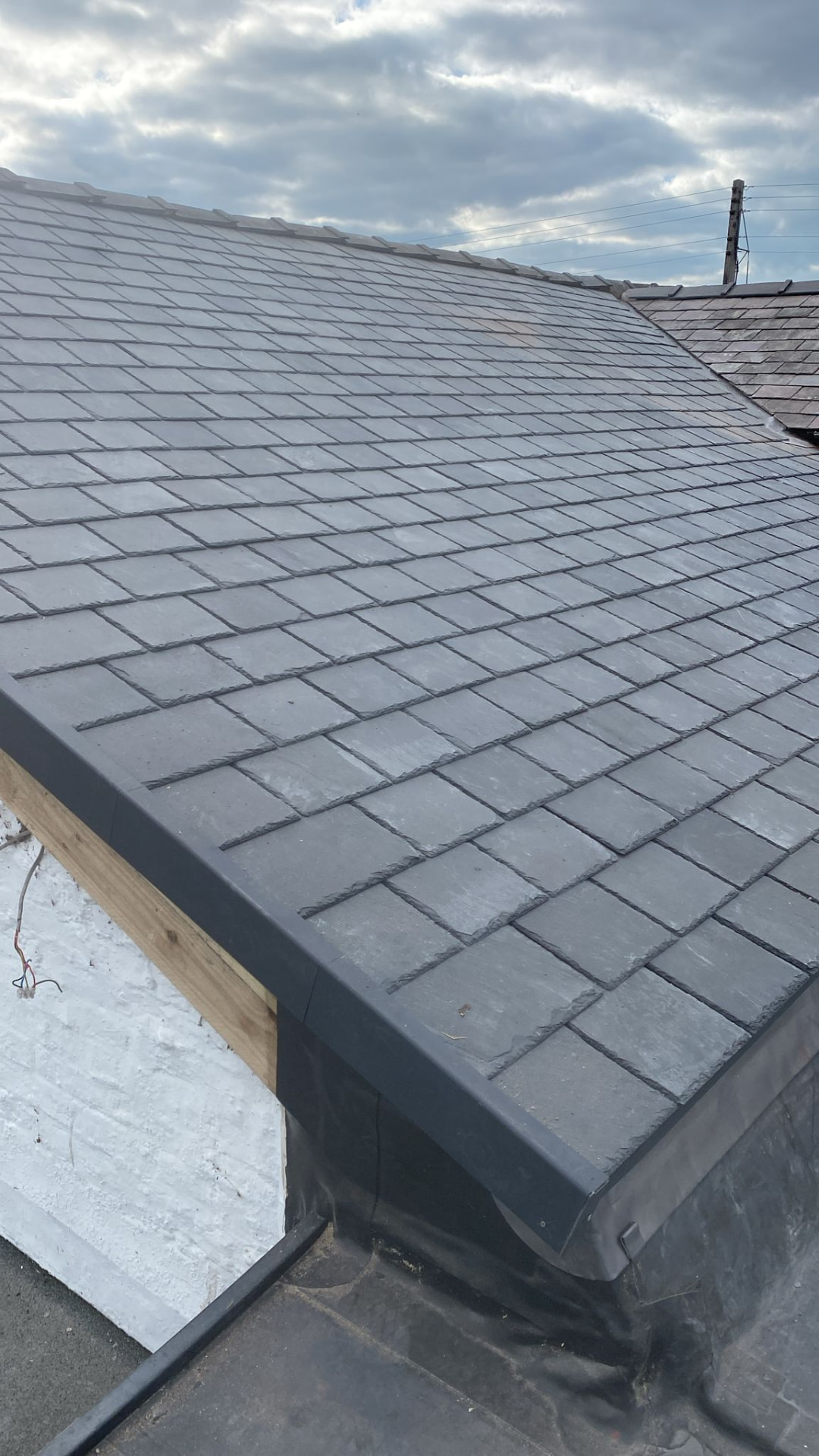
Repaired slate roof with new lead flashing and edge trim in North Wales

Roof Repairs In Bangor
And Across North Wales
Leak Traced, Not Guessed

A free survey, photographs of exactly what has failed, and a fixed-price repair quote in your inbox the same day or the day after. You pay for the repair, not for our time on a ladder.

5.0 from 13 Google reviews · 24/7 emergency call-out · workmanship guaranteed

5.0 Google rating

13 reviews

Three generations

family roofing team

25-year guarantee

on every new roof

Fully insured

workmanship guaranteed

24/7 call-out

storm damage & leaks

What A Roof Repair Actually Involves

A roof repair is the targeted replacement or refitting of the part of the roof that has failed: a slipped or cracked slate, a broken tile, a split ridge, a lifted flashing, a perished mortar bed, a blocked or split valley, a tear in a flat-roof membrane. The rest of the roof is left alone. The point of a repair is to stop water getting in at the one place it is getting in, and to do it in a way that does not shorten the life of everything around it.

The difficult part is never the fixing. It is the finding. Water rarely enters where the stain appears: it runs down the underside of a batten, tracks along a rafter, and drops through the ceiling two metres from the actual defect. That is why every repair here starts with a survey rather than a quote over the phone. We get on the roof, photograph the defect, and give you the findings in writing so you can see what you are paying to put right.

Repairs make sense on a roof with life left in it. If we get up there and find the battens are rotten, the nails have corroded through, or half the slate is delaminating, we will tell you plainly that patching it is throwing money away, and quote the replacement instead. If the roof has ten good years in it, we will say that too, and repair it.

Who This Is For

  • Homeowners with a fresh stain on a ceiling, a drip in a loft or damp on a chimney breast
  • Landlords and letting agents who need a defect closed out quickly and evidenced in writing
  • Buyers and sellers whose survey has flagged "slipped slates" or "defective flashing"
  • Property owners after a storm, where slates have come off or a ridge has moved
  • Anyone who has had a repair done before that did not hold
Book the free survey

What A Small Leak Costs If You Leave It

Water that gets past the covering does not sit still. It soaks the felt or membrane, wets the batten, and keeps the rafter damp long enough for rot to start. Insulation that gets wet stops insulating and stays wet, because there is no airflow up there to dry it. Plasterboard swells, the skim cracks, and the stain spreads every time it rains.

The bill escalates in steps, not in a straight line. A slipped slate refitted this month is a small job. The same slate left for a winter of North Wales rain means a ceiling, decoration, insulation and possibly rewiring of a lighting circuit. Left for two winters it can mean structural timber, and at that point the scaffolding, the strip and the rebuild cost many times the original repair.

There is also the part that does not show up on an invoice: damp air in a bedroom, mould around the ceiling line, and an insurer who declines a claim because the damage was gradual rather than sudden. Storm damage is usually covered. A leak you have known about for eighteen months usually is not.

Mistakes We Are Called Out To Fix

  • Sealant and mastic smeared over a defect. It buys one dry season, then cracks and traps water behind it.
  • New slates nailed over old, rotten battens, so the repair pulls out in the first serious gale.
  • Mortar-bedded ridges rebedded with the wrong mix, which shrinks and cracks within a year.
  • Replacement slates of the wrong thickness or gauge, which sit proud and lift in the wind.
  • Flashing replaced with flashband tape instead of dressed lead, which lasts a couple of summers at best.
  • Chasing the stain on the ceiling instead of the defect on the roof: repairing an area that was never leaking.

How A Repair Runs

Step 1: Inspection

We come out at a time that suits you, get on the roof safely, and inspect the covering, the flashings, the ridge, the valleys, the verges and the guttering. Where access allows, we look inside the loft too, because the underside tells you where water has actually been running.

Step 2: Diagnosis in writing

You get photographs of every defect we find and a written account of what is causing the water ingress, what is secondary damage, and what is simply age. If there is more than one option, you get both, with the difference in cost and life expectancy set out.

Step 3: Fixed-price quote

The quote follows the same day or the next. It is a fixed price for the repair described, not a day rate, so the figure you agree is the figure you pay. Access equipment is included; we carry our own scaffold towers for smaller jobs, which keeps the cost down.

Step 4: The repair

A deposit secures your date. We turn up when we said we would, work off proper access, and use materials that match what is already up there: reclaimed Welsh slate where the roof calls for it, dressed lead where a flashing has failed, the correct mortar mix where a ridge needs rebedding.

Step 5: Test, tidy and guarantee

We check the repair holds under water, clear the guttering of debris from the work, take away everything we brought and leave the site clean. The repair carries our workmanship guarantee, and you get completion photographs for your records.

What You Get Out Of It

The leak stops at the source

We repair the defect that is letting water in, not the place where the stain appeared. That is the difference between a repair that holds and one you call someone back for.

You see the evidence

Photographs before and after, and a written survey. You are not taking anyone's word for what was wrong ten metres above your head.

The price does not move

Fixed-price quoting means no day rates, no creeping extras and no invoice at the end that is larger than the number you agreed.

Damage stops escalating

Closing a leak now protects the plaster, the insulation and the roof timbers: the things that turn a modest repair into a five-figure job.

Emergencies are answered

We run a 24/7 call-out across North Wales. Emergency and storm call-outs are typically £150–£250 depending on time of day and location.

Guaranteed workmanship

Every repair is covered by our workmanship guarantee, from one slate refitted to a full valley rebuilt.

Recent Roof Repairs Work

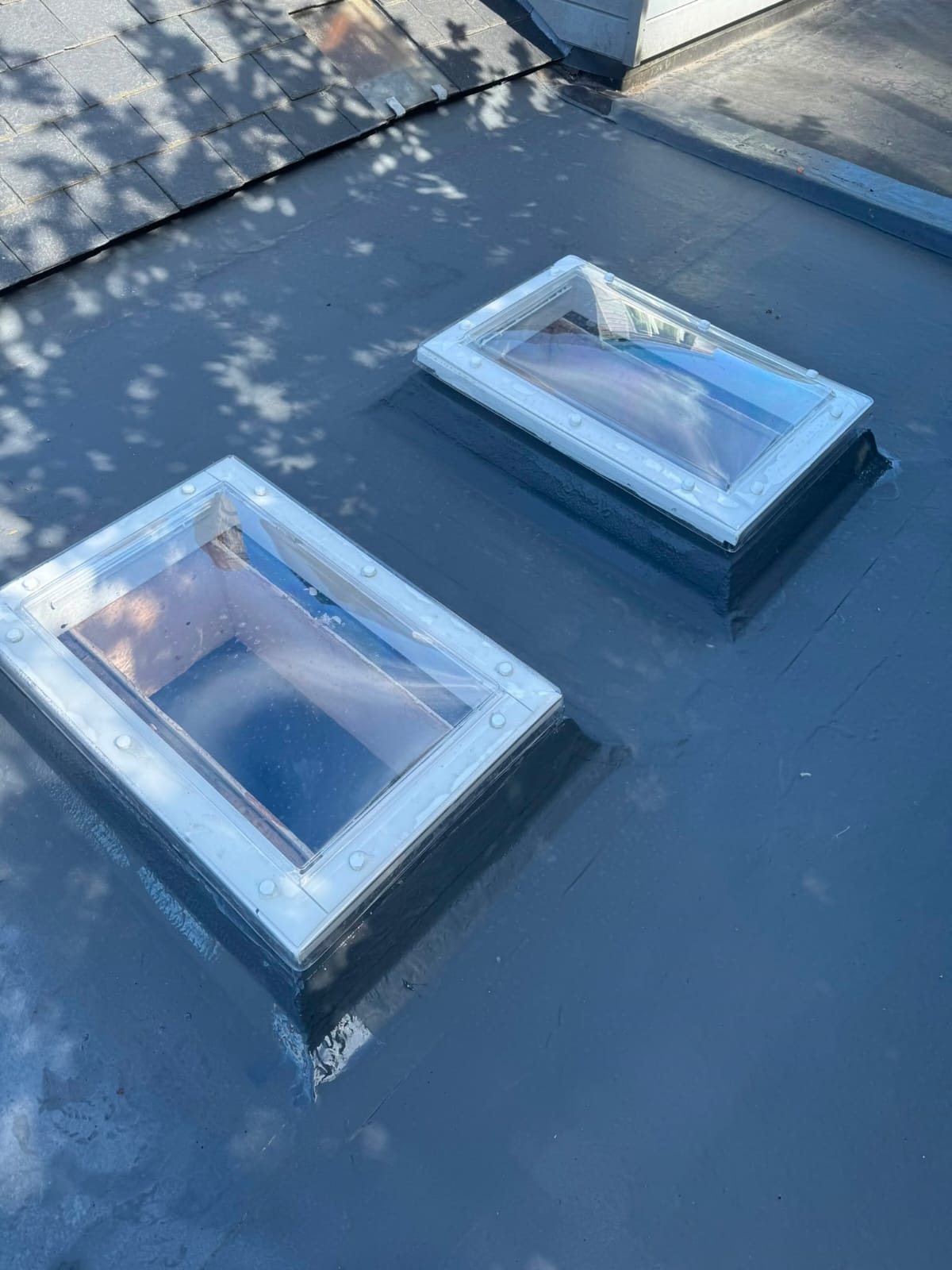
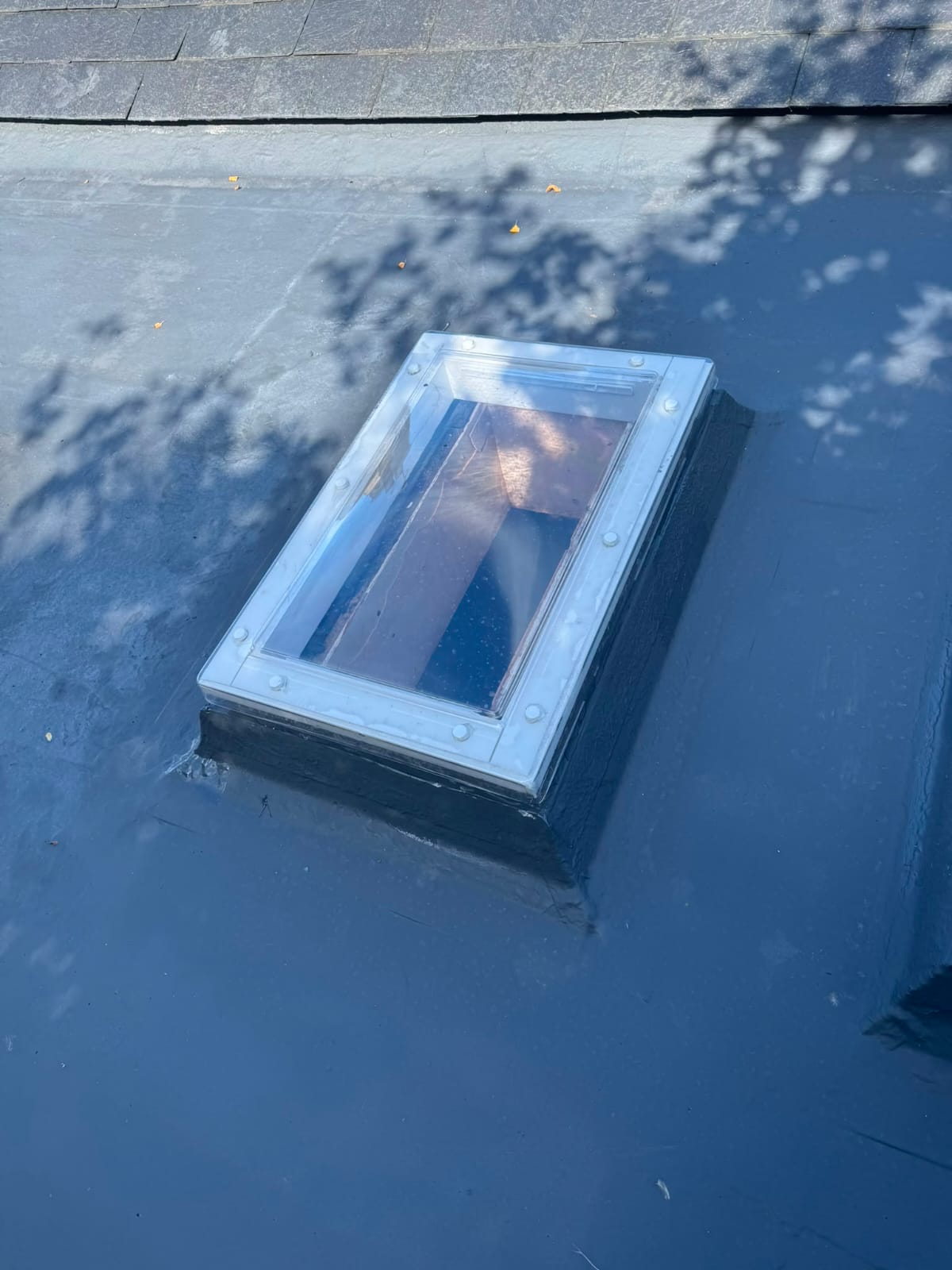
Close-up of a new rooflight installed in a fibreglass flat roofRooflight sealed into a newly laid flat roof covering

Repairs We Carry Out

Slate and tile repairs

Slipped and cracked slates are refitted with copper or stainless tingles where nailing is not possible, or renailed properly where the batten is sound. We match the existing slate for size, thickness and colour: reclaimed Welsh slate for older properties, new Spanish, Chinese or Brazilian slate where the roof was laid in one of those, and artificial slate where that is what is up there.

On tiled roofs we replace cracked and frost-damaged concrete and clay tiles, refit tiles that have crept down the batten, and renew broken tile-and-a-half units at verges. Ridge and hip tiles that have loosened are taken off, the old mortar cut away and the tiles rebedded, or converted to a dry-fix system where a mechanically fixed ridge is the better long-term answer.

Flashings, chimneys and lead

Most persistent leaks on an otherwise sound roof come from a junction rather than the field of the roof. Chimney abutments, stepped flashings, back gutters, soakers, valleys, parapet upstands and skylight surrounds all rely on lead that has been dressed correctly and cut into a chase, not stuck on.

We carry out all lead work in the correct code for the position, with the right laps and expansion joints so it does not split. Where a previous repair has been made in tape or mastic, we strip it back and replace it properly: patching over failed tape simply moves the leak along.

Flat roof and valley repairs

Flat roofs fail at details first: upstands, drip edges, outlets and laps. We repair EPDM rubber, GRP fibreglass, torch-on felt and liquid systems, patching or overlaying to the manufacturer's method so any remaining system warranty is not compromised. Where a flat roof is at the end of its life, we say so and quote a replacement rather than sell you a patch.

Valleys between two pitches take more water than anything else on the roof. Lead valleys that have split from thermal movement, and open valleys clogged with moss and debris, are cleared, relined and re-dressed so water runs off rather than backing up under the slates.

Storm damage and emergency response

North Wales coastal weather takes slates off, lifts ridges and pushes water sideways under laps that would be fine anywhere else. After a storm we make the roof safe first, temporary covering, removal of anything loose that could fall, and then survey and quote the permanent repair.

We photograph everything, which is what insurers ask for. If you are claiming, the written survey and dated photographs give your insurer the evidence they need for a storm-damage claim.

Domestic, commercial and retail

The same crew works on houses, commercial units and retail premises across North Wales. On commercial and retail buildings the priority is usually keeping the premises trading, so work is sequenced around opening hours, and access is planned so your customers and staff are not walking under it.

On domestic properties, especially older and listed ones, the priority is that the repair is invisible. Reclaimed Welsh slate, matched mortar and properly dressed lead mean the finished job looks like nothing ever happened to it.

Drone inspections

We survey with a drone where a roof is high, steep, awkwardly accessed or simply unsafe to walk on. High-resolution aerial photography and video show ridge tiles, valleys, chimney flashings, hips and the far side of a roof in detail, without scaffolding, a tower or the cost and delay that come with them.

It also makes the diagnosis visible to you. Instead of a verbal account of what is wrong up there, you get the actual images of the slipped slates, the cracked ridge mortar or the failed lead soaker, so you can see what you are being asked to pay for and compare quotes on the same evidence.

A drone does not replace a hands-on inspection where one is needed: some defects can only be confirmed by lifting a tile or probing a deck. We use whichever gets you a correct answer fastest, and often that is a drone first, then targeted access to the one area that needs it.

Free survey & quote

Always free, always in writing, back to you same day or next.

Fixed price

Quoted as a fixed price, not a day rate. No creeping costs.

Guaranteed work

Workmanship guaranteed on all jobs. 25 years on new roofs; flat-roof warranties per manufacturer system.

Straight Answers

The questions we are asked most about roof repairs across North Wales.

Ask us directly on 07538 586813
Do you carry out drone inspections?

Yes. Where a roof is high, steep or awkward to access, we survey it by drone and send you the high-resolution photographs and video of the defects, so you can see the problem yourself without paying for scaffolding just to find out what is wrong.

How much does a roof repair cost in North Wales?

It depends entirely on what has failed and how the roof is accessed, which is why we survey before quoting. The survey and the quote are free, the quote is a fixed price for the work described, and we carry our own scaffold towers for smaller jobs so you are not paying for scaffolding you do not need.

Do you charge for the survey or the quote?

No. Surveys and quotes are always free. You get photographs of the defects, a written account of what we found, and a fixed price, with no obligation to go ahead.

How quickly can you get to a leak?

We operate a 24/7 emergency call-out across North Wales. Emergency and storm-damage call-outs are typically £150–£250 depending on the time of day and your location. Non-urgent repairs are booked in as soon as your date is confirmed by deposit.

How long will the repair take?

Most single-defect repairs, a slipped slate, a cracked tile, a section of flashing, are a same-day job. Rebedding a full ridge, relining a valley or renewing a chimney's lead work usually runs to one or two days.

Is it worth repairing, or should I replace the roof?

That is exactly what the survey answers. If the battens, nails and the majority of the covering are sound, a repair is the sensible spend. If the roof is failing generally, we will tell you and quote a replacement: new roofs are guaranteed for 25 years.

Do you guarantee repair work?

Yes. All work carries our workmanship guarantee. On flat roofs, the manufacturer's system warranty is passed on to you where a full system has been installed.

Will my insurance cover it?

Sudden storm damage is usually covered; gradual wear is usually not. We photograph and document everything we find, which gives your insurer the dated evidence they normally ask for.

How do payments work?

A deposit secures your date, a mid-job payment follows on longer jobs, and the balance is paid on completion. All major payment methods are accepted.

Do you work on listed and older properties?

Yes. We have worked on multiple listed buildings in Betws-y-Coed, and reclaimed Welsh slate is a specialty. Repairs on older properties are matched so they are not visible from the ground.

Book Your Free Survey
And Get A Fixed Price

Tell us what the roof is doing and we will come and look at it. You get photographs, a written account of the problems and a fixed-price quote, with no obligation to go ahead.

  • Free survey and written findings with photographs
  • Fixed-price quote same day or the day after the visit
  • Workmanship guaranteed; 25 years on a new roof
  • 5.0 from 13 Google reviews across North Wales

Roof leaking right now?

07538 586813

24/7 emergency call-out across North Wales.

Call nowFree survey